
We still have honey for sale. Drop site members can order online or send in payment through Zelle or PayPal using my email address. On-farm members can pick it up in the pick-up tent.
Still planning the garlic planting party for Saturday, October 3rd starting at 1:00. Let me know if you can make it. Many hands make light work!
What will we have this week?
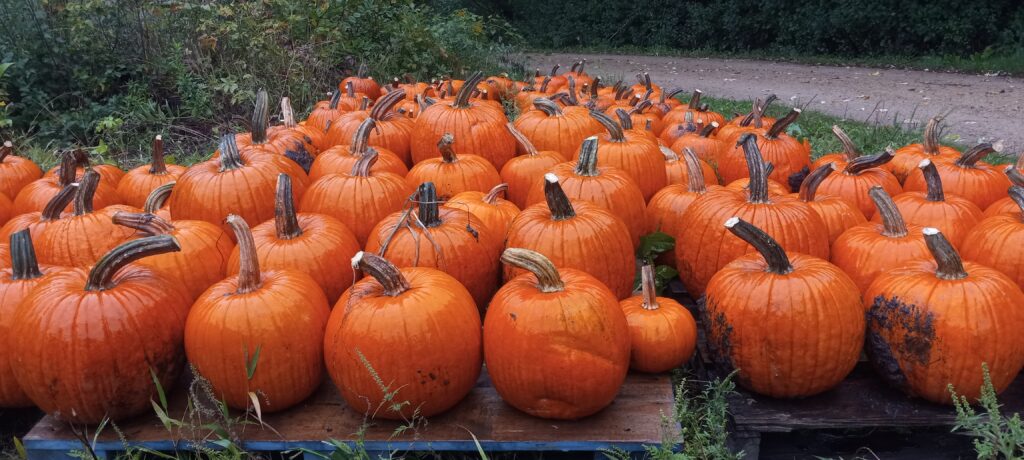
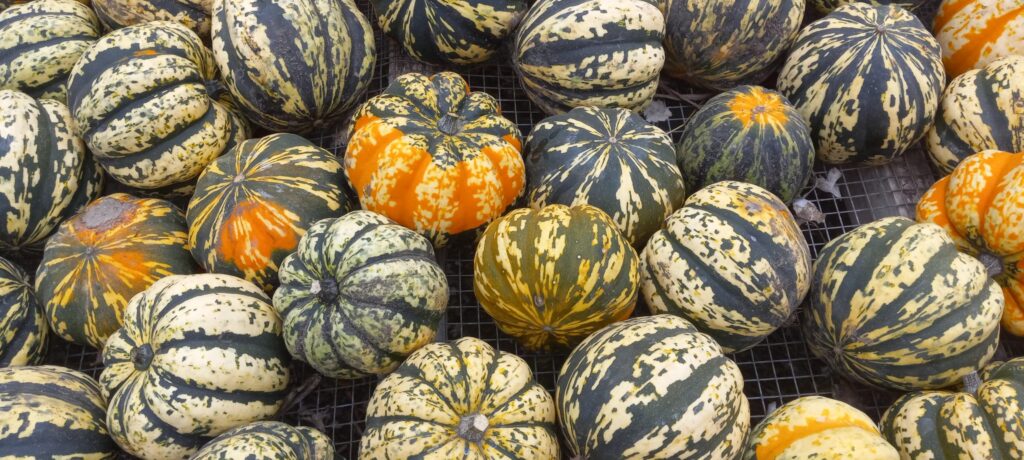
Pie pumpkins, carnival squash, onions, potatoes, tomatoes, cherry tomatoes, peppers, lettuce mix, a few purple daikon radishes, and whatever else we can find.
FlowerShare this week is pumpkins! For delivery folks be sure to grab your pumpkins from your usual pick-up site. For on-farm members be sure to grab your pumpkins from your usual pick-up site.
A Quick Note About Potatoes
As we all should know by now, we stopped washing potatoes a couple of weeks ago since they were coming out of the ground with relatively little dirt stuck on them compared to past seasons. What we’ve discovered and sort of already knew but now we’ve proven it, not washing potatoes makes them far less susceptible to storage diseases. We have found no rotten potatoes since we stopped washing them. In past years we’ve lost around 5-10% of the potatoes, and more importantly, had to deal with stinky, rotten potatoes. So if the potatoes continue to come out of the ground relatively clean we will send them out relatively dirty. If they have a lot of mud on them (most likely with the recent rains) we will wash them prior to sending them out. Hopefully this works for everyone. If not, let me know. Your opinion matters.
Farm News
One of the most frequent questions asked in the pick-up tent during pick-up times (and perhaps possibly during non-pick-up times when I’m not there but now I’m wondering what are people doing in the pick-up tent during non-pick-up times?) is “How are the crops doing with this *insert weather here*?” For example,”How are the crops doing with this heat?” Or, “How are the crops doing with all this rain?” Seems like Minnesotans like to talk about the weather.
Sometimes they ask it in a different way, like for example, “Hey Farmer Chris (I think they think that by addressing me as “Farmer Chris” I’ll be more receptive to their intrusive questions) what do you think about that storm last night?” Or even, “Quite the wind last week, eh?” No matter how the question is asked I am more than happy to answer them. And since so many have asked maybe I should address one of them in this week’s newsletter. So here we go!
“Hey Farmer Chris, is all this rain good or bad for the crops?” The answer is clearly “Yes”. All this rain is good and bad for the crops. The main positive rain provides is water over a large area without the need for electricity or equipment or labor or any other resource. And dinosaur urine , er, ah, water is essential to growing crops. So having rain is quite beneficial.
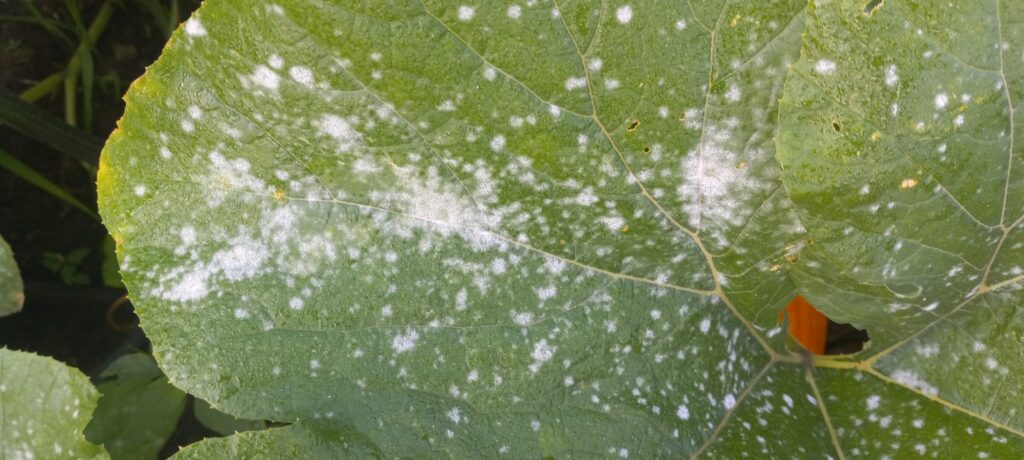
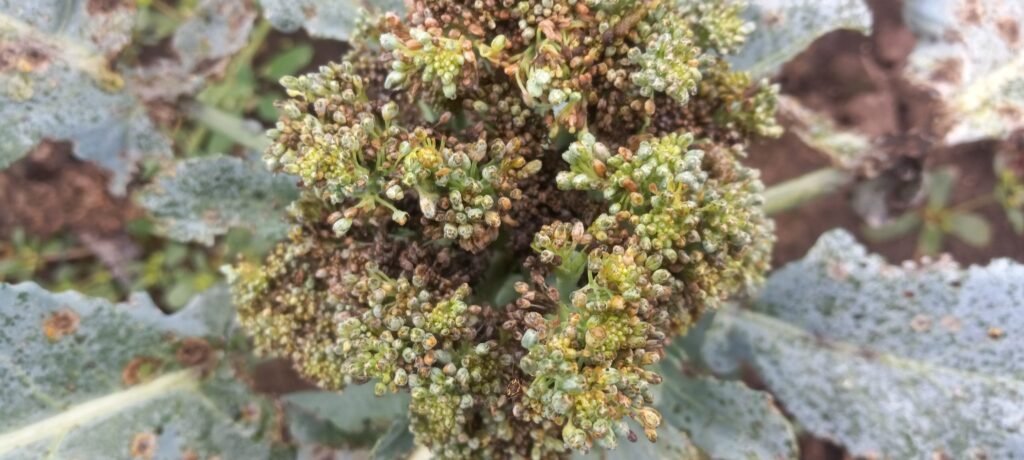
But frequent rain is less so. The main issue with frequent rain is the crops never have a chance to dry so diseases become more common. We find growing lettuce outside with frequent rain causes more “rust” on the underside leaves of the plants. The broccoli succumbs to a diseases like black rot or alternaria, both diseases make the head unusable. Cucurbit plants get powdery mildew. Also with frequent rain we have far more dew in the morning. This also keeps the plants wetter longer and creates additional opportunities for diseases to thrive.
With frequent rain the relative humidity in the field where the crops grow is far higher than what the weather service reports. All this rain evaporates from the ground and transpires from the plants and creates a tropical level of humidity we have to deal with as we harvest the crops. Talk about high dew points!
But for some crops rain is practically essential, specifically sweet corn (though again constant rain isn’t good). We’ve found that trying to provide sweet corn with enough water in a consistent manner using overheard irrigation is difficult at best, especially once the plants grow taller than the sprinklers. I suppose we could buy taller sprinklers but still it seems to me that corn needs a lot of water to grow and if we have a deficit of rain we’d rather keep the tomatoes and peppers alive rather than try to make the sweet corn happy.
So how does the rain late in the season affect the farm? At this point in the season many of the crops have ended their productive lifecycle. All the cucurbits are done, though we will continue to give out winter squash and pumpkins since we have them in storage. All the spring/cool crops are gone but many of these we replant in the fall so they are coming back. The rain prevents us from digging the remaining potatoes. Hopefully it doesn’t cause them to sprout and start growing. We continue to have a problem with black rot on our fall broccoli. It has not been a good broccoli year.
We’ve also had years where the fall rain starts and doesn’t stop so our garlic planting gets pushed off week after week until we are forced to plant it when we shouldn’t. One season it was pushed off until November where we had to wait for the ground to thaw before we could plant it each day. That was rough.
We like to harvest beans when the plants are dry. Wet beans put into a cooler have a tendency to mold. So having a lot of rain with a lot of dew reduces our available green bean picking time. This results in the beans getting much large than we like.
Constant rain makes for a long day of work. Slogging through mud to harvest whatever needs to be harvested is challenging.
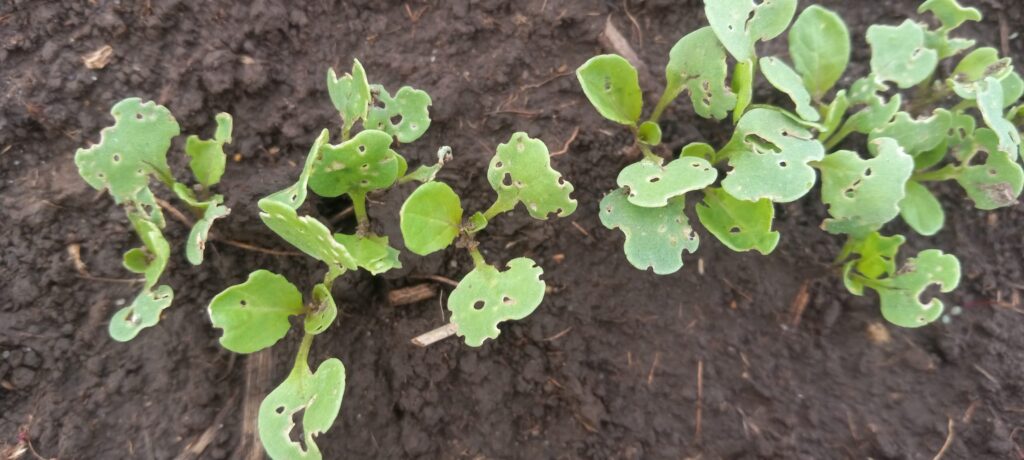
Back to the positive side, the recently planted arugula, lettuce mix, spicy salad mix and radishes are loving the rain. So are the carrots we planted awhile ago and hope to harvest after the first frost (makes them sweeter!) Usually the rain causes the demise of the flea beetles in the fall. It’s like they finally give up after pestering us all summer long! Unfortunately this season the beetles persist.
So yes rain good. And rain bad. Like they say, “All things in moderation, including moderation.”
Recipe of the week
Here is the recipe I should have sent out last week but since I didn’t have it I couldn’t include it.
Garlic-Soy Green Beans
Ingredients
- 1 lb green beans trimmed
- 1 T neutral oil
- 4 cloves garlic finely minced
- 1 T water
- 1 tsp rice vinegar
- 1 tsp sesame oil
- ½ tsp fresh grated ginger optional
- 1-2 green onions sliced, optional
- red pepper flakes optional, to taste
Instructions
- Mix the soy sauce, water vinegar, sesame oil and honey together in a small bowl
- Heat a large skillet over medium-high to high heat.
- Add neutral oil and green beans
- Cook 4-6 minutes, tossing occasionally, until blistered in spots but still with some snap
- Add garlic and ginger and cook for about 30 seconds
- Pour in the sauce and toss for another 1-2 minutes until it reduces slightly and coats the beans
- Finish with sesame seeds, green onions and a pinch of red pepper flakes if heat desired
Joke of the Week
What does a cloud wear under its raincoat?
Thunderwear
As always, feel free to send in questions, comments, suggestions, jokes or anything else you think would be useful!