
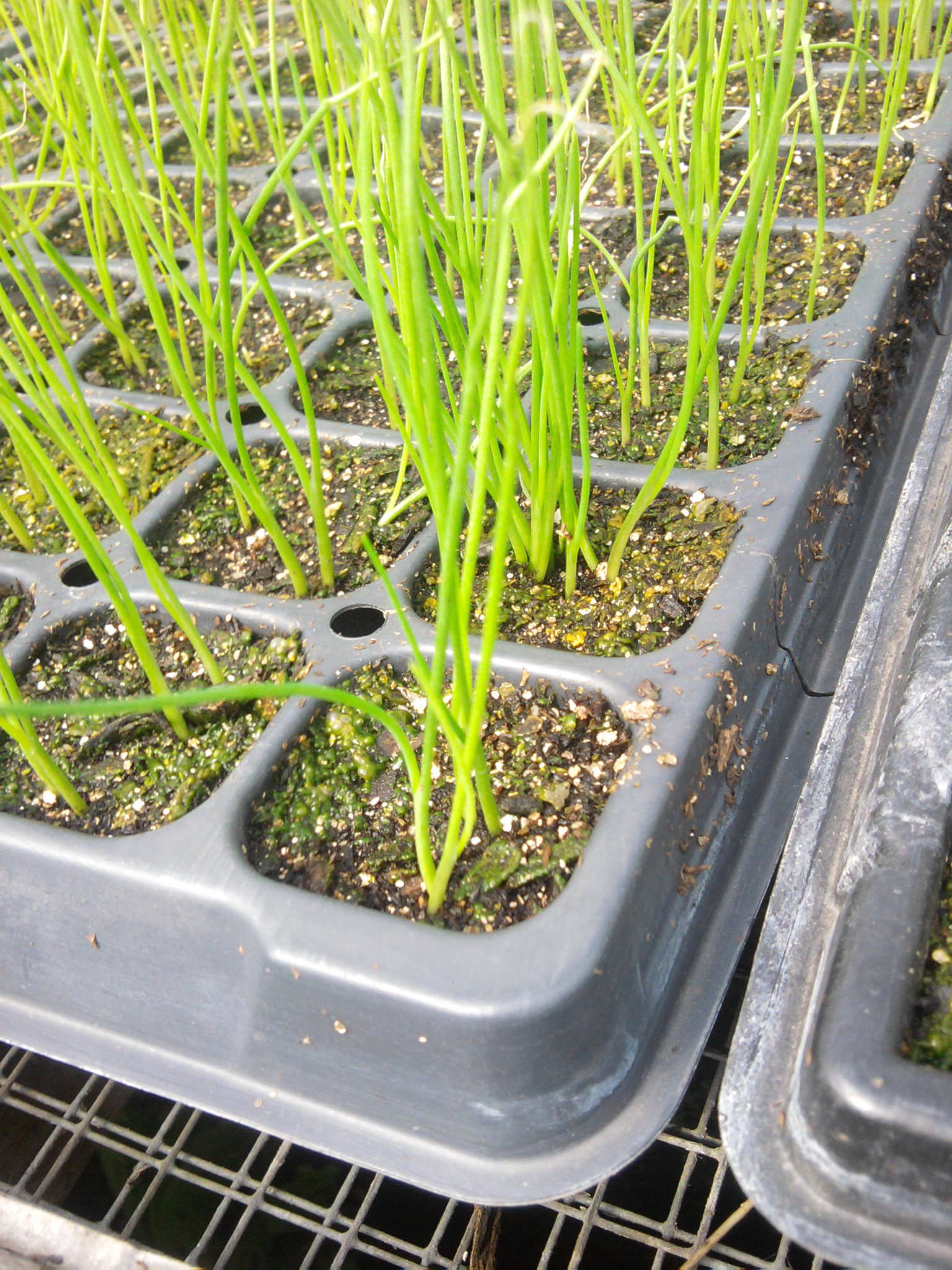
 The 2014 spring season is underway! Unlike professional baseball, professional farming does not pay well enough to move the operation to Florida during the spring. So we manage by growing our plants inside. It’s kind of like having a domed stadium but without all the public subsidies on a much smaller scale.
But before we get to the interesting things on the farm, this is a good time to remind you that final payment is due this month. If a payment plan would better fit into your budget (especially for those who purchase more of our add-on items like seafood, meat, cheese or fruit) please contact me and we can make arrangements.
Speaking of add-on items, let me know if you’d like to add any to your account. We resell delicious organic fruit, healthy meats from pastured animals, eggs from free-range chickens, raw milk cheese, wild Alaskan seafood from small boat fisherman, and organic sun-dried coffee. We also have a winter storage share, herb plants and beautiful flower bouquets from the farm. Finally for those with younger family members we are teaming up with Budding Farmers for an educational program geared toward pre-school and elementary children. If you’d like to add these to your account just send me a message; no need to fill out an order form. See individual pages for details.
Farm Update: As mentioned above, the spring pre-season is underway! The first things we plant in the greenhouse are the alliums. These are the onions, leeks, and shallots. We are going with a new lead-off hitter this season. Instead of our typical white spring onions we decided to mix it up a bit and grow red spring onions. Spring onions are also called green onions, table onions or scallions but I can’t call them red “green onions” – it confuses some of us. So spring onions it is. These are the first onions we give out during the season.
We’ve also started planting the brassicas – broccoli, cauliflower, Brussels sprouts, cabbage and kohlrabi. One new item in this group is an early mini-broccoli. It is a cross between broccoli and gailon, otherwise known as Chinese broccoli. It is a smaller but sweeter head of broccoli. We have not tried this before; hopefully you will like it. If not, blame Rebecca, she was the one who suggested we try it.
Next we start the herbs we grow from cuttings. We want these to root and grow to a reasonable size by the beginning of May. This season we have added French tarragon, lemon thyme, lemongrass, peppermint and spearmint to our herb plant list. If you’d like to purchase herbs for your own garden please see this page for details!
Speaking of the greenhouse, one day while driving past I noticed the exhaust from our heater was not its usual happy steam color. It was more of an ugly soot color. I then recalled when I was in the greenhouse planting and the heater started it didn’t start the usual quiet, comforting way but with a loud, uncomforting bang. It didn’t happen every time so I figure like a lot of things in farming, ignoring it would make it fix itself. It is easy to ignore one symptom; more difficult when there are two. Plus, if the greenhouse heater fails it would set back the farm a month or so.
Which reminds me, though farming has been portrayed as this glamorous lifestyle with plenty of free time and easy living, the reality is far different. To be a farmer you need to know a lot more than how plants grow, when to harvest them, what pest may arise, how to control the pest, how to eradicate weeds, how to harvest the plants, how to handle the produce post-harvest, and a bunch of other things people think farmers need to know. But you also have to be a diesel mechanic, a plumber, a welder, a construction worker, a soil scientist, and in this instance an HVAC technician.
So I took off the overalls, put on the coveralls, grabbed a bucket of tools and proceeded to search the internet for causes of black smoke from the heater. Aha, not enough oxygen! Now, where did I put that oxygen? And when did I run out? Well, not exactly. I just needed to figure out why the air-fuel mixture had changed to too much fuel and not enough air. So off to the greenhouse with my bucket of tools.
I first opened up the heater and set the thermostat to a temperature where it “called for heat” as us HVAC technicians like to say. Once the burners fired I noticed one of the burners burned yellow with black smoke whereas the others had this beautiful blue hue. I figured this is where the problem lies.
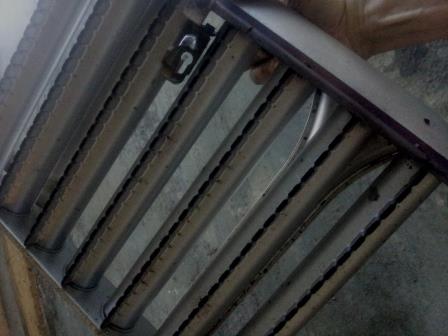 My first step was to see how changing the air/fuel mixture would affect the flame color. I loosened the appropriate bolt and tried to move the appropriate thingy (as we HVAC technicians like to call them). It wouldn’t budge. Since I had a wrench-shaped hammer in my hand I gave the thingy a whack (probably getting a little too technical here). Still wouldn’t budge. So I figured I might as well tighten up the bolt that held the thingy before I ended up breaking something.
But before I did that I figured, maybe it just needs one more whack. So I took my wrench-shaped hammer and gave it another whack. The yellow flames turned blue even though the thingy still didn’t budge. It’s a miracle!
But being the kind of person I am, which is the kind of person who was kind of sick of seeding flats of brassicas, I decided I better clean out the heater burner. The whack on the thingy probably dislodged some crap that if not cleaned away would relodge in the previous place and cause the whole sooty thing to happen yet again. So I took it apart, blew out the burner with compressed air, and reinstalled it. And it has worked ever since. Maybe putting all that compressed air into the burner gave it enough oxygen to make it work!
As always, if you have any questions do not hesitate to contact me.