
 First a few announcements.
Facebook followers. I just want to point out to everyone who follows us on Facebook that on average people who “like” pages only see 6% of what that page posts – unless that page owner is willing to pay Facebook for more exposure. Yes, only 6%. And their goal is to reduce it down to 1-2%. There is something called “Get Notifications” that seems to provide a solution though I don’t understand what it does and whether it would solve this problem (plus I see no reason to learn if it works since Facebook will change it once I understand it and find it useful). So please don’t rely on Facebook to find out what is happening on the farm. Subscribing to the newsletter via email or RSS feed is the most reliable way to keep informed about the farm. We will still cross-post newsletters to Facebook and post other interesting stuff though so don’t unlike us.
SeafoodShare cut-off is May 15th. Since we contract for the specific amount of seafood we can’t add shares after this date. So please let us know by then if you plan to purchase seafood.
Farm Events: I will be sending out a survey shortly that asks about your interest in different farm events. Your response to this survey will help guide us to where we should put our resources. Please take the time to respond to the survey (it will be sent to the email address we have on file); it should only take a minute or two – unless you are a really deep thinker.
Still taking orders for 2014. Wednesday and Thursday on-farm pick-up are full. We are still taking orders for all the drop sites and Monday and Friday on-farm pick-up. Spread the word and get a $25 credit.
Farm News: In this newsletter I will focus on herbs. The first herb I was introduced to many years ago was my great uncle Herb. He was married to my grandma’s twin sister Leah. He must have worked in a printing shop or paper factory because whenever we saw him he always had really big pieces of paper. So big you would have to crawl on them to color the whole thing. Unfortunately my children will never have this experience as the internet continues its assault on all things fun and interesting. How many big pieces of paper do you see these days? None, since the internet has limitless virtual paper, which you can’t crawl I might add. All we have now – and what my kids will never have – are the wonderful memories of paper. As an aside, when I listen to Pandora on my smart phone’s small speaker it sounds remarkably like my old transistor radio. When I mentioned this to a friend she suggested a remedy would be for me to start listening to songs recorded after the 1960s.
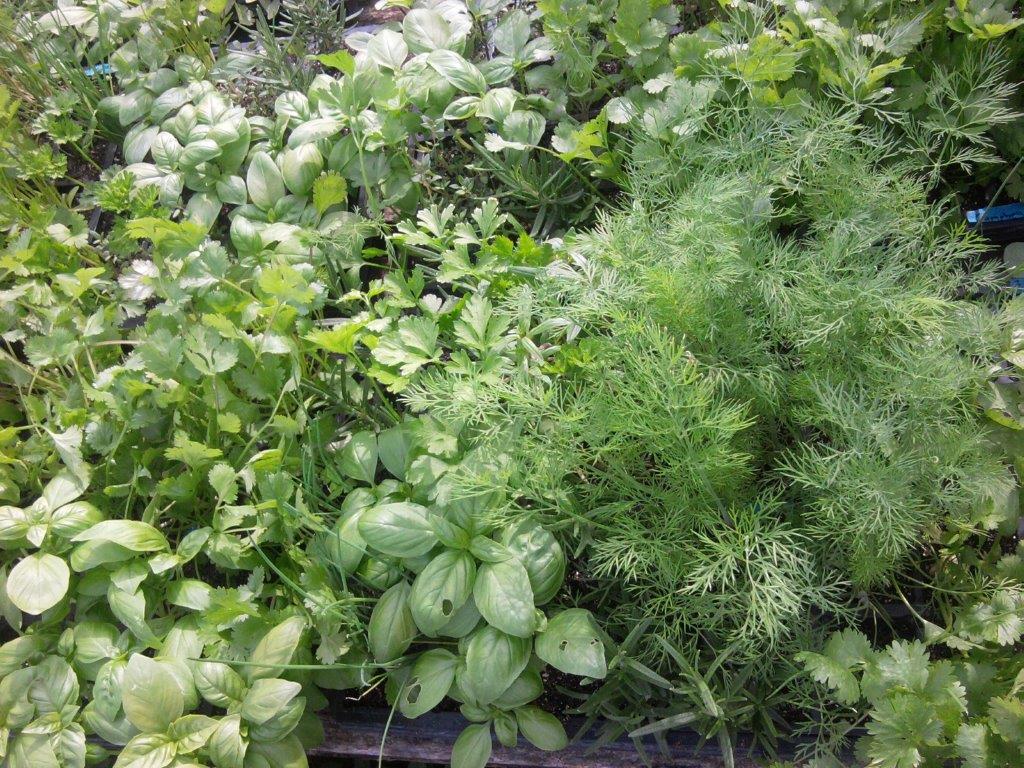
But back to the discussion of herbs. Though uncle Herb was the first herb I ever knew he was not the only herb in my life and certainly not a culinary herb. I suppose if he was a chef he’d have been a culinary Herb or if he was a doctor he’d have been a medicinal Herb. But the real point of this newsletter is to talk about plants used as culinary herbs. Here at the farm we grow 17 different culinary herbs. Eleven of these herbs we start from seeds. The other six we propagate from cuttings. Over the years we have expanded our list of herbs and have planned an herb garden for the perennial herbs. Unfortunately we haven’t implemented the plan yet. I wish I could say it is on the drawing board but unfortunately I can’t find a big enough piece of paper. So it languishes in my head awaiting the day when we find the paper time to put it together.
In the meantime, we continue to grow the annual herbs – and some of the fast growing perennial herbs – in the fields with the rest of the plants. Other perennial herbs we grow in pots and put them inside for the duration of the cold weather – moving them to the greenhouse when we start it up in March. Some of the perennial herbs can survive the harsh climate of Minnesota winters, some cannot. None of the true annuals can, that’s why they are called annuals. Chives, garlic chives, oregano and thyme are perennials we start from seeds. All the herbs we grow are part of your VeggieShare and will randomly appear in your delivery box or in the pick-up tent. For those who like to garden or want more control over their herb allotment, we also sell these herbs as plants.
Here are the herbs we are growing this season starting with those we grow from seeds:
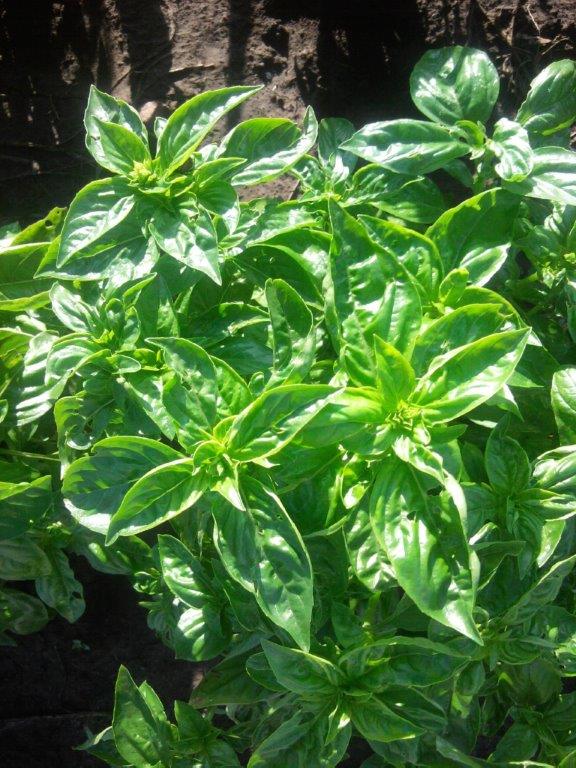 Basil – Italian Large Leaf: Similar to the traditional Genovese basil but with stronger flavor. Great for pesto, tomato salad, pasta sauce and pizza. This is an annual and will not overwinter in Minnesota.
Basil – Thai: Has more slender leaves than Italian basil with beautiful purple stems. It has more anise flavor and is great for Asian cooking – especially Thai. Will not overwinter.
Chives: These slender, onion like leaves have a nice, mild flavor when the full onion flavor isn’t desired. I like them with potatoes. Chives will overwinter in Minnesota so plant them in a perennial garden.
Garlic Chives: Need to add a bit of garlic flavor? Try garlic chives. They are a little more strappy shaped than the standard chive. Garlic chives also overwinter.
Cilantro: Either you like it or you hate it, but for true Mexican or Asian cooking it is indispensable. Looks like flat-leaf parsley with rounded tips. This is a very short-lived annual. Here on the farm we plant four successions. If you are adventurous you can save the seeds from cilantro; the seeds are called coriander.
Dill: It’s not just for pickles. Try the dill weed (the leafy part of the dill plant) on fish. This is an annual but will reseed if you let it.
Oregano – Greek: We grow the Greek variety of oregano due to its more intense flavor. Use in Mediterranean cooking, especially tomato sauces. This perennial will survive Minnesota winters. Plant it in your perennial garden.
Parsley – Curly Leaf: This is the more wild of the parsley brothers. A little less flavor but a lot more curl. Parsley is a biennial so is typically grown as an annual here in Minnesota.
Parsley – Flat Leaf: This parsley is the one to use when you want to taste it. Its brother may be more flashy, but when you want parsley flavor, use flat parsley. Also grown as an annual.
Summer Savory: Similar in taste to thyme but maybe a bit more peppery. Great with beef and chicken. Grown as an annual.
Thyme: The indispensable herb. Probably the most difficult to remove from the stem due to its tiny leaves (sometimes I just grind it up in the food processor – stem and all). Great in almost anything except chocolate-chip pancakes. Usually survives Minnesota winters but can perish if not given adequate snow coverage.
These next herbs are ones we overwinter inside. There may not be a lot of these herbs available just because of how we have to grow them. We can’t grow enough at this time, though once we get the herb garden put together the winter hardy herbs will increase in abundance.
French Tarragon: Oui oui! If you want tarragon, this is the only tarragon to use. Don’t settle for the more invasive Russian tarragon or you may end up with one less Crimea. Has a nice anise flavor well suited for chicken and fish. It is best to mulch this for overwintering outside.
Lemon Thyme: The more flashy cousin of regular old thyme. This is a favorite of mine. It has the thyme taste with a zing of lemon. Want lemon chicken? Use lemon thyme! If we get good yields on our propagations we should be able to give this out in reasonable quantities. I don’t think this will overwinter so it is best grown in a container then bring inside when the weather turns cold.
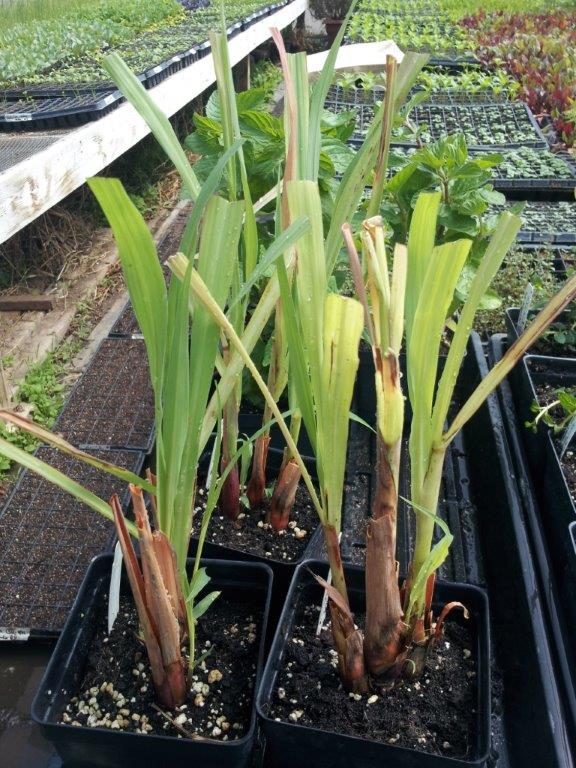 Lemongrass: An essential ingredient in Asian dishes. It has a wonderful lemony flavor. Though fairly easy to propagate, it does not survive freezing temperatures. It makes a great patio plant and can easily overwinter inside a bright room. We won’t have much of this due to its slower growth and our short growing season. Best to purchase a plant if you want lemongrass.
Peppermint: Great mint flavor that makes a wonderful tea. Once we have an herb garden we should have large quantities of peppermint. Until then, if you want peppermint you should buy a plant. It spreads so plant it where you can contain it. It will overwinter outside.
Rosemary: We have the mother of all rosemary plants. It has been with us for 10 years or so and came as a donation from one of our members. It has great flavor – the best rosemary flavor I’ve had. Wonderful for rosemary potatoes. Also good for Mediterranean cooking. It is frost sensitive but can overwinter inside. If you want rosemary it is best to purchase a plant since it does not grow fast enough to supply all members of the farm.
Spearmint: My favorite of the mints. Bigger leaves than peppermint. Makes a wonderful tea. It is in the same category as peppermint in that until we have the herb garden setup we won’t have enough to go around. Best grown in a space where you can contain its spread.
If you would like to purchase plants you can either fill out an order form or just send me an email with your selections. The herbs we grow from seed are sold in six-packs for $6 a six-pack. You can mix-and-match within a given six-pack. The herbs grown from cuttings are sold in three inch pots for $4 each.
That is all for now. If you have any questions, comments, suggests, jokes, or uses for culinary herbs, do not hesitate to send them my way.