
Last week of the season! Please plan accordingly.
We’re still taking orders for 2027! We’ve had a good response so far. Thank you to everyone who already rejoined. We appreciate your support! For those who haven’t yet you can rejoin by sending in a $100 deposit via check, Zelle, PayPal or cold hard cash (if you bring it in). You can also rejoin by ordering your share online where you can also pay with credit card, though you’d have to pay the full amount since my store doesn’t have the ability to pay only a portion of the total using a credit card. Let me know if you have any questions!
What will we have this week?
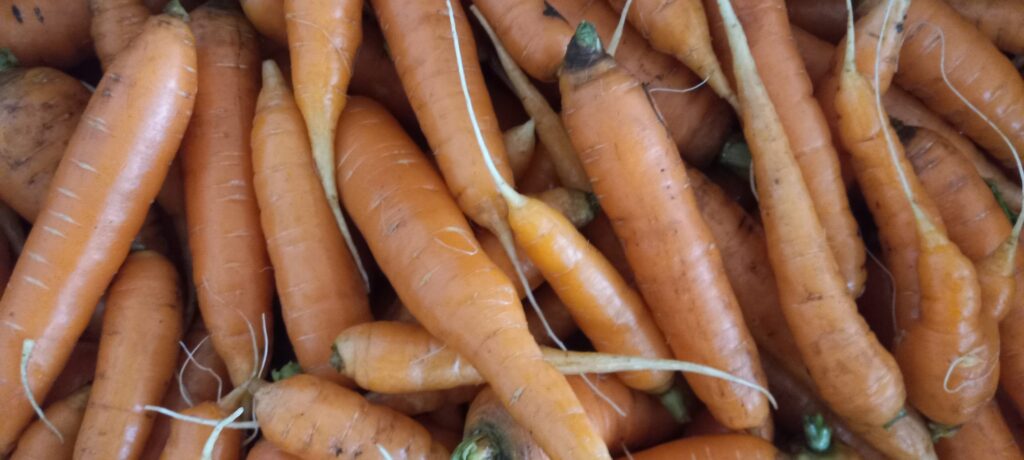
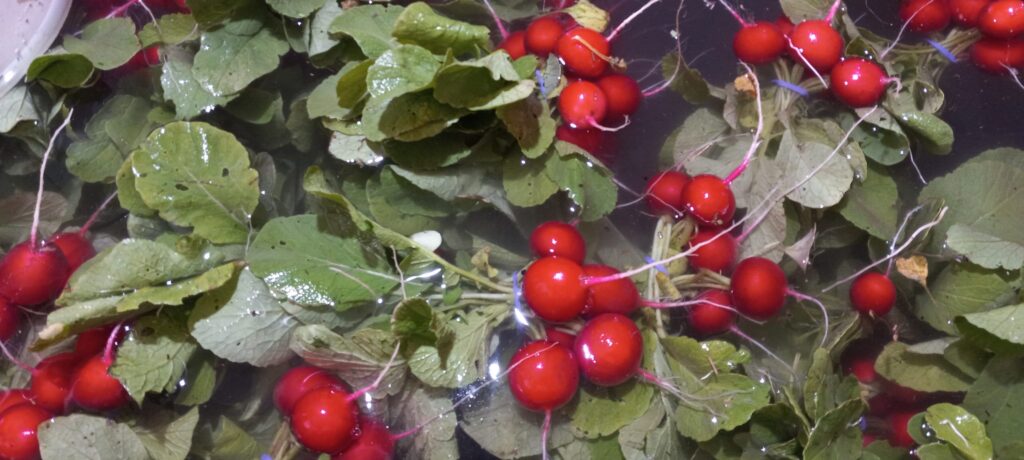
Oh my goodness we have a lot of things! I think there are 11 categories! We have a lot of radishes, a lot of onions (the yellow onions we give out this week are storage onions so they are much more pungent than the sweet onions we’ve given out previously; best used for cooking), sweet potatoes (these are mostly seconds so not quite as good looking as the previous sweet potatoes), celery (not the biggest or the most tender but has great flavor and would be perfect for a soup), carrots! (but not as many as we’d like), daikon radishes (maybe far more than we’d like), potatoes, peppers, eggplants (unprecedented having them so late in the season), shallots, lots of various winter squash, a few tomatoes, lettuce mix, some spicy salad mix, arugula, some cabbage, possibly kale though with already having so much other stuff I’m not sure there is room for kale, some BS, some popcorn and I know there are even more things I am forgetting. Maybe I should write them down in the future (well I do but the notebook is not where the computer is).
No other shares this week. No room in the delivery boxes anyway…
Farm News
One of my philosophies for our CSA shares at this time of year is to give you a whole bunch of stuff you can store and eat later after the farm is over. It is my long-term covert strategy to remind you to rejoin if you haven’t already! To help you out in this endeavor and to make it seem even less like a covert strategy to remind you to rejoin (is it really covert if you keep telling them the secret plan?) I put together this storage sheet with details on how to properly store a bunch of these items. As you’ll read, vegetables storage requirements are as varied as the vegetables themselves. I’ve added a bit of advice to each listing as to where I would store them if it were me storing them.
Most of the information below is from UC Davis Department of Plant Sciences and can be found (along with a bunch of other vegetable fact sheets) at https://postharvest.ucdavis.edu/produce-facts-sheets/vegetables.
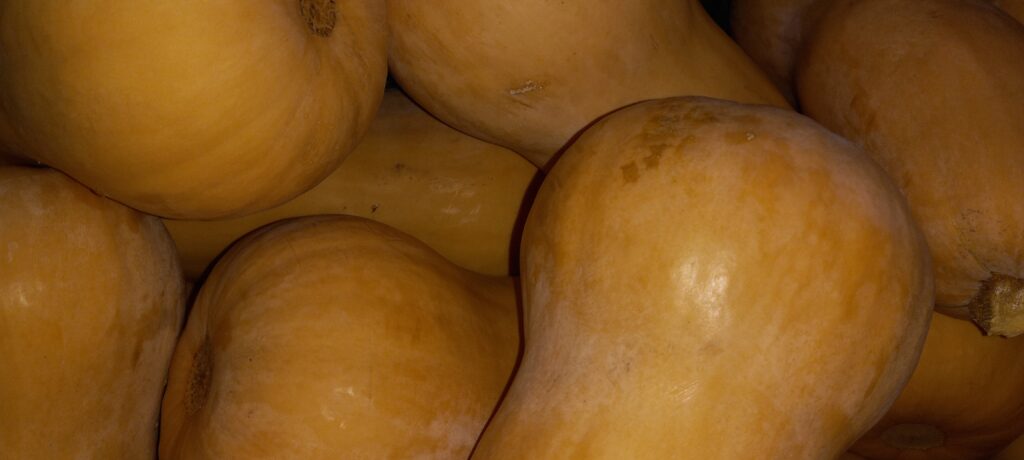
Winter Squash: Winter squash are sensitive to chilling injury when stored below 50 degrees. Optimum temperature is 55 to 59 degrees with relative humidity at 50-70%. Higher temps will result in excessive weight loss, color loss and poor eating quality. High humidity will produce decay. A wine fridge is a great place to store winter squash. But if yours is full, a cool, dark basement would probably be second best.
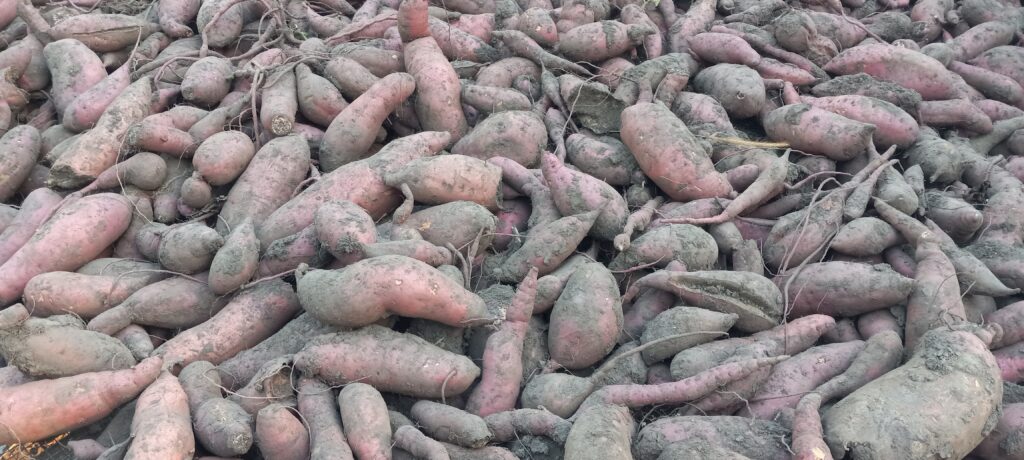
Sweet potatoes: The optimum storage conditions for sweet potatoes are 55 to 59 degrees with a relatively high humidity (>90%). Stored in these conditions sweet potatoes can last 6-10 months although sprouting may begin after 6 months. Higher temps with lead to more rapid sprouting and greater weight loss due to evaporation. Lower temps can lead to cold injury. Roots should not be washed prior to storing. Wine fridge, or a cool, dark basement would work but since we want higher humidity you may want to store them in an unsealed or perforated bag. Or just eat them all at Thanksgiving.
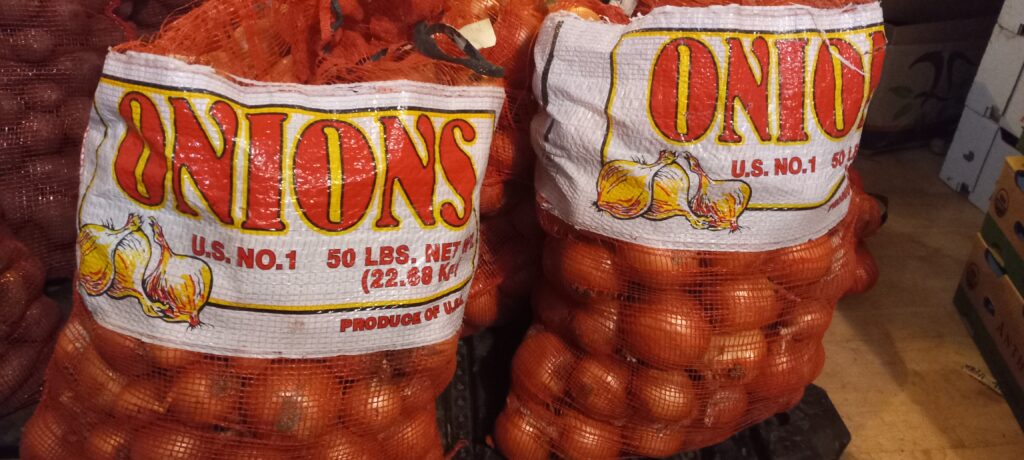
Onions/shallots: Dry onions and shallots require curing prior to storage (we already did this for you). Optimum storage conditions are 32 degrees with 65 to 70% humidity and adequate air circulation. Mild onions can store for approximately one month (though we’ve found they can store longer than that). Pungent onions (the ones we put in WinterShare and the yellow ones we give out this week) can store six to nine months. Store them in your beer fridge, which is typically colder than your normal fridge if you are storing your beer correctly (maybe another newsletter?) Sure your beer may start to smell like onions but then you aren’t drinking your beer fast enough. Plus you are likely to check on the status of your onions frequently. If you put them in the crisper drawer make sure to open the slide to let more air in.

Garlic: Garlic can be kept in good condition at normal room temperatures (68 – 86 degrees) for 1-2 months (I’ve found it lasts longer than that) under relatively low humidity (under 75%). Eventually under these conditions the bulb will degrade and become spongy and shriveled due to weight loss. For long term storage garlic should be store at 30 – 32 degrees with a low relative humidity (60-70%). Good airflow is also necessary to prevent moisture accumulation. Garlic under these conditions will store for up to 9 months. Garlic odor can transfer to other products and should be stored separately. These could also go into your beer fridge. Nothing like garlicky, oniony beer!
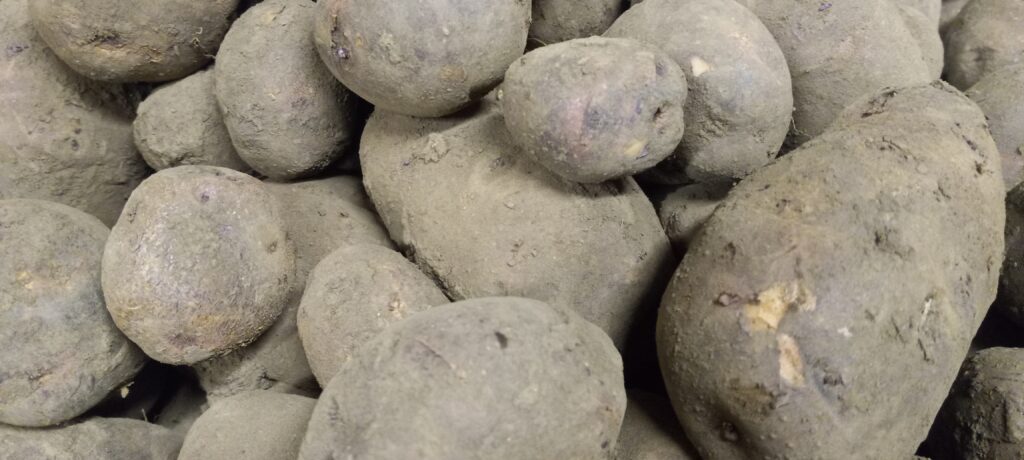
Potatoes: Potatoes should not be washed prior to storing. They should be stored between 45 and 55 degrees in a dark area with a relative humidity of around 95%. Light exposure will cause the potatoes to produce chlorophyll and glycoalkaloids turning the skin green. If your potatoes turn green you can cut away the green portion and consume the rest. Typically the green portion is near the surface and easily trimmed away. Temps below 40 causes the starches to convert to sugar. Fluctuating temps can cause the potatoes to sprout. Back to the wine fridge or the cool basement for potato storage (or as Dan Quayle would say, potatoe). But since they want high humidity you may want to try to trap a bit of the moisture around them so maybe put in a perforated — but not sealed — bag.
As you can see, most of these items want cool temps. If you don’t have the wine fridge and the beer fridge, a root cellar should suffice. And lacking a root cellar, a cool, dark room somewhere in your house is probably as good as we can get. And if that isn’t possible, you just might have to eat them quicker than you’d like thus subverting my master plan to constantly remind you to rejoin. Maybe a future newsletter will focus on other long term strategies (e.g. freezing,canning, fermenting, etc.) so that you are reminded all the way until next season!
Recipe of the Week
Since we have eggplants this late in the season I thought it would be beneficial to have one final eggplant recipe. We made this last night and I thought it was quite tasty. For those people who have family members who don’t like eggplant, I suggest feeding them this in a very dark room (maybe where you store your potatoes). I think they will like it if they don’t know what it is.

Sticky Garlic Eggplant
Ingredients
- 2-3 eggplants (Asian preferred) cut into bite-size pieces
- 2 T neutral oil
- 3 cloves garlic minced
- 1 tsp giner grated
- 2 T soy sauce
- 1 T rice vinegar
- 1 tsp honey or brown sugar
- 1 tsp sesame oil
- 2 T water
- ½ tsp cornstarch
- sliced green onions and sesame seeds for garnish
Instructions
- Cut eggplants into bite-sized pieces leaving the skin on.
- Heat neutral oil in a large skillet over medium high heat. Add eggplant into single layer.
- Cook for 6-8 minutes, turning occasionally, until brown and softening.
- While eggplant is cooking, whisk together soy sauce, vinegar, honey, sesame oil, water and cornstarch.
- Once the eggplant has softened and browned, add the garlic and ginger to the skillet and cook for 30 second until aromatic.
- Pour in sauce and toss for 1-2 minutes until glossy and thickened.
- Place in serving dish and add sliced green onions and sesame seeds.
Notes
Joke of the Week
What is a ghost’s favorite vegetable?
Scare-ots.
What is a witches favorite vegetable?
Spell-ery.
What is a zombie’s favorite vegetable?
Human beans
As always, send in your questions, comments, suggestions, share orders, and scary vegetable jokes!