
An important message in this week’s newsletter. Please read!
We still have seven weeks left this season!
We have honey for sale starting next week! The honey is from a farm member who keeps bees here at the farm plus a few other places. You can buy it when you pick-up in the tent. For delivery folks you can either order it online, or email me and send the money through Zelle or Paypal. You can use my email address for either service. Price is $10 for a one pound jar.
We’ll continue to take back the pint-size clam shell containers.
Save the date! Garlic planting is scheduled for Saturday, October 3rd., starting time is 1:00 pm. This event is weather dependent so may change. Use the pencil font when adding it to your calendar.
What will we have this week?
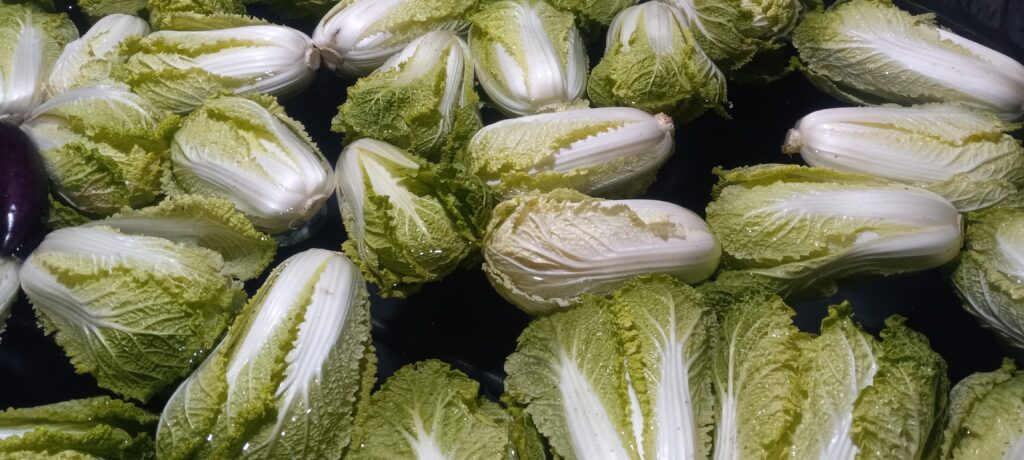
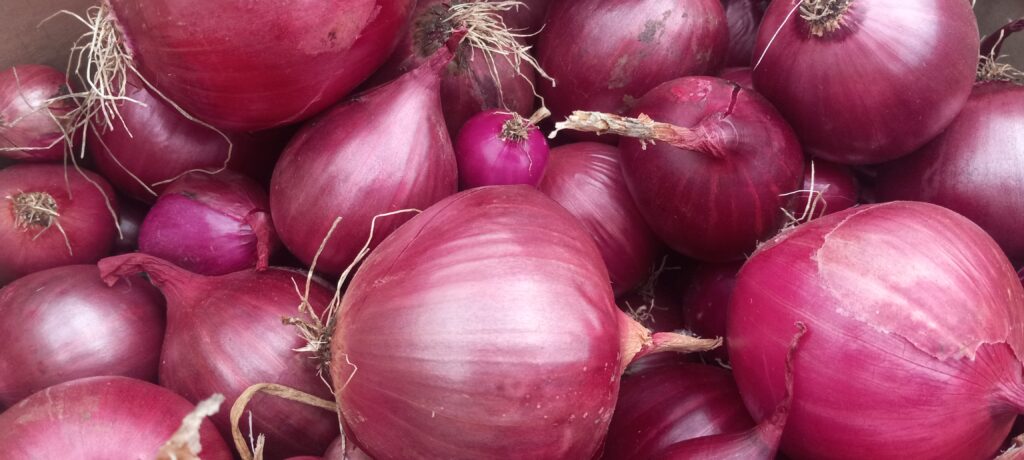
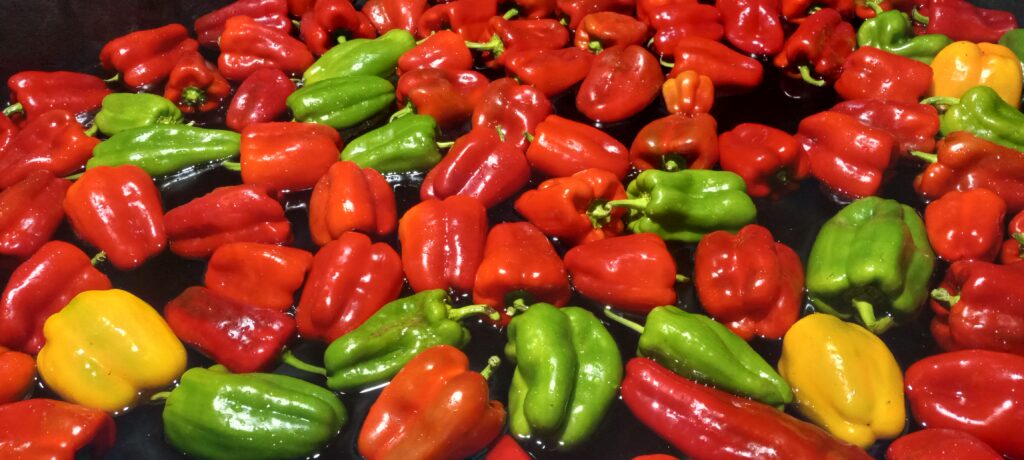
Beans. Lots and lots of beans. It is surprising how many beans we get when the deer don’t eat the plants! We’ll also have potatoes, some tomatoes, peppers, some tomatillos, some cherry tomatoes, onions, garlic, still more okra (please make it stop), a few eggplants, a few zucchini, some cabbage, some Napa cabbage, some hot peppers, and all the other things I forgot.
It is a flower week though the flowers are slowing down considerably.
Farm News
Awhile back during the off season I got an email from one of our members asking us about PFAS, the forever chemicals now ubiquitous in our daily lives. She wrote, “I wanted to ask about the well contamination in Afton. Since most of the wells have PFAS, are there any practices you do to avoid the produce from being contaminated?”
I responded by mentioning we had our wells tested awhile ago and the results came back undetectable for PFAS. The wells around us tested more recently also came back undetectable. But her inquiry got me thinking that it had been a few years and maybe it was time to retest. We just received the results this past week.
The good news is that the well we use for irrigation came back undetectable for PFAS. I was very happy to hear this. PFAS contaminated irrigation water source remediation is a difficult and expensive problem to solve. A lot of water is used for irrigation, especially in years like this with little to no rain. So coming back undetectable is fantastic.
The well we use for washing produce came back with 7.8 parts per trillion of PFOA and received a well advisory for drinking water from the Minnesota Department of Health (MDH). According to the letter from MDH that accompanied the results, “While your well water is safe for bathing, showering, washing clothes and cleaning, MDH recommends limiting use of your unfiltered water for drinking and cooking purposes.” Yikes! I wasn’t expecting a well advisory. What does that mean for washing produce? The letter did not address this situation.
Fortunately I knew someone unusually qualified to help answer that question: Dr. Kris Hansen, a research scientist whose work at 3M in the 1990s helped uncover the widespread presence of PFAS chemicals in human blood. I felt if anyone knew what the risk was in using this well’s water for washing produce she would have the answer.
In my discussion with her she mentioned how PFOA was incredibly water soluble which is one of the reasons we find it in underground aquifers. It doesn’t adhere well to other things. So in our situation, when we wash the produce in the contaminated water the PFOA will remain dissolved in the water and not stick to the produce. So far so good I thought. “But what about the water that remains on the produce. Should we be concerned with that?” I asked. She felt the amount of water left on the produce would not be a significant contributor to our PFAS exposure compared to what we are exposed to on a daily basis. And, if our customers wash the produce with clean water prior to consuming the produce — something we’ve advocated for as long as we’ve farmed — the clean water should remove the small amount that could remain in the residual wash water. The PFOA, again being incredibly water soluble, would quickly dissolve in the clean wash water and would be practically if not completely eliminated from the produce leaving very little risk. This was very reassuring and allayed my fears that we were unknowingly adversely affecting the health of our customers — the exact opposite of our intentions!
So where do we go from here? I feel we still need to do something to bring this well water up to MDH drinking water standards. Sure it is safe for the purposes we use it for, but I would feel better if we didn’t have PFAS in the wash water in the first place. According to MDH, a granular activated carbon filter (GAC) is sufficient to remove PFAS down to their drinking level standard. As of the writing of this newsletter I am awaiting a call back from MDH to discuss how they can help. If this was a typical household situation they would provide and install a GAC filter at no cost to us. I need to understand if in our situation we qualify for this program.
In the meantime, we will continue to wash the produce with the understanding that it is safe for us to so — especially if you wash it at home prior to consuming. If I did not feel confident in its safety I would not send out the produce — or eat it myself. If you have any questions or concerns please, please, please let me know. I want our customers to be assured that the produce we deliver is safe, healthy and nutritious!
Recipes of the Week
Here is an email from one of our readers, maybe our only reader, with some ways to use all the beans you are getting including additional helpful comments!
Recommend this one with some grated or minced garlic in with the yogurt
This one was good (especially with a little lemon juice and zest) but it’s hard to go wrong with parm
https://www.greenheartgarden.com/recipes/fossolia-ethiopian-green-beans-and-carrots
And this one was really tasty with the wax beans!
Now for all of you wondering what to do with okra, this recipe comes highly recommended from our other reader. I guess we have two readers!
https://www.lanascooking.com/okra-chips/
Joke of the Week
What is a tailor’s favorite vegetable?
The string bean.
As always, send in your questions, comments, suggestions, or anything else you’d like to send in!