Why should you eat this week’s winter squash soon? Maybe the newsletter below will tell you. In fact, I’m sure it will. In the mean time, please enjoy these brief messages.
We are now taking orders for the 2022 season. It is a bit earlier than usual however with the warm weather we’ve had this season everything is earlier. You can either order your share from our online store or simply send/bring in a check for the $100 deposit. We also accept cash for those who want to pay the old fashioned way.
Mark your calendars for this years Garlic Planting Gala. Garlic Planting is scheduled for Saturday October 2nd starting at 1:00 and going until it is all planted, usually no later than 4:00. Come out, meet your fellow farm members, take a look at where your food is grown and have the chance to complain to the author about these lousy newsletters — all at the same event! Let us know if you can make it. There is plenty to do for all ages and physical abilities.
We are still taking back pint clam shells. Feel free to bring them to the farm or put them in your delivery tote at your drop site.
We had another 2 1/2″ of rain last night. We could be nearing a record for most rainfall in a a season!
Six weeks left for the season counting this week. Please plan accordingly.
Farm News
On Friday we had the time available to harvest the winter squash and pumpkins. I was both looking forward to the project and dreading it all at the same time. My reason for optimism was that this summer’s warm, dry weather and our ability to irrigate the squash made for a fantastic winter squash growing season. Plus, the warm weather caused the squash to mature sooner then usual; this was the earliest we have ever harvested winter squash. My dread was due to if my optimism was warranted, there would be a lot of heavy lifting that day.
Well, not long after starting the project my optimism turned to dread and my dread turned to discouragement. As we walked through the squash plants harvesting the butternut squash — my personal favorite — we came to realize that instead of a banner squash year we would have a dismal squash year. All season while the weather was hot and dry and the plants were growing we could see a lot of squash fruits on the plants. This lead to our optimistic forecast. However, once we started to harvest them we realized well over half the fruits were rotten on the part of the fruit that touched the ground — the side we couldn’t see until we picked it up to cut it off the vine. What a disappointment!
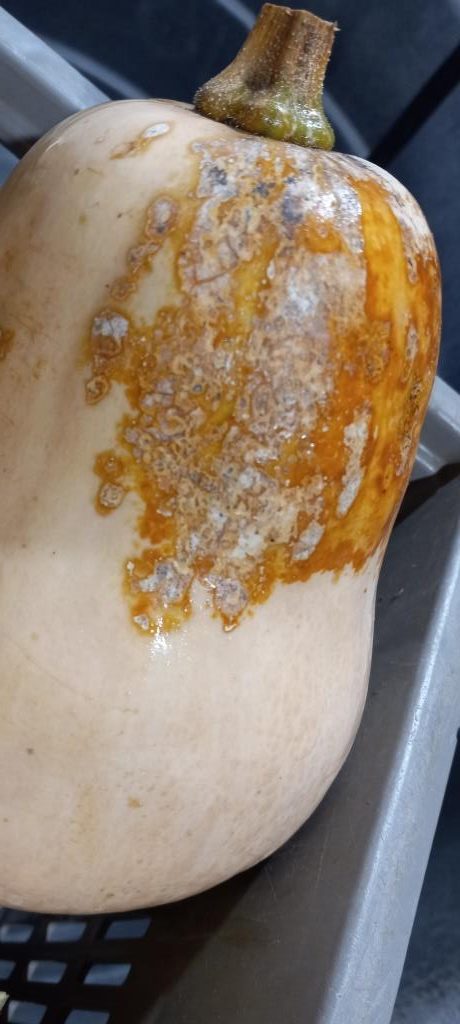
There seems to be at least two issues with this season’s squash and pumpkins; black rot and phytophthora blight. With the butternut squash, most of the fruit has black rot. It makes the fruit have weird patterns of brown lines on the surface (er, shouldn’t it be called brown rot?) Black rot spreads during times of cool wet weather. But didn’t we have hot, dry weather this summer? Why yes we did, until the two weeks in August when we had rain totaling over ten inches — a very wet period — plus all the dew we’ve been having during the September mornings.
After rejecting about 90% of the butternut crop we changed our criteria and started to save any butternut squash that had a reasonable amount of good eating on it. To clarify, black rot doesn’t make the fruit inedible, it just makes the fruit rot sooner and faster. Storing butternut fruits with black rot is near impossible. But, eating butternut fruits is still possible! So we harvested as many butternut fruits we felt were worthwhile and hope you don’t mind cutting around the bad spots.
Which brings me to my first and very important point: Sorry for the ugly butternut squash. But please eat it as soon as possible. That’s not to say you have to eat it the day you get it but I would highly recommend you eat it before the veggies come the next week. This is true of all the squash we send out this week.
The carnival squash seemed to fair a bit better. The acorn and spaghetti squash were similar in black rot frequency to the butternut squash. The pie pumpkins fared far worse. I think we got less than ten pie pumpkins from around 200 plants — not good.
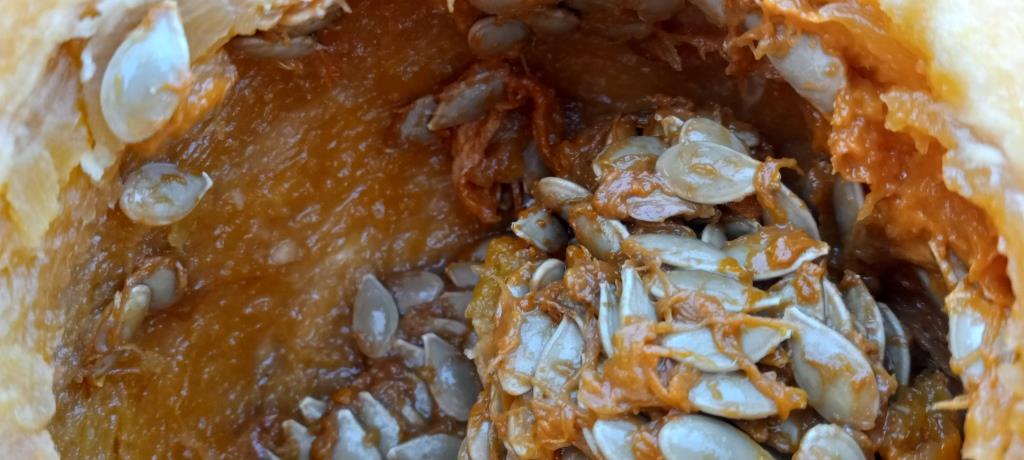
But as I said, black rot isn’t the only malady. Last season we found a few carnival squash that looked perfectly fine from the outside but when cut, the inside was goopy and smelled off. We asked the University of Minnesota if they had any idea what was wrong and they were stumped. I guess we were in good company at least. Upon further review this year we think we have Phytophthora blight. The UofM’s web site says that it is not prevalent in Minnesota and has only been found in a few fields. However their web page may be many years old for all I know. Or perhaps we are one of the lucky one to have it in our fields. Hooray? We tried to take out all the squash we felt had this problem but may have missed a few. So if you find squash that is goopy inside please first accept our apology and second let us know so we can track how prevalent this problem is this season. Sending me a picture would be helpful as well! I already found a pie pumpkin that had it this year.
We do have a few squash that aren’t badly diseased that we are curing in our greenhouse. If they survive, we will give these out in a future week since we believe and hope they will be more storable.
Also last week we harvested the rest of the onions and shallots. I may have mentioned this before but if I haven’t here it is for the very first time: I think we buried the drip tape too deeply for the onions. Onions are shallow rooted plants. I knew this but thought putting the drip tape down four inches would be shallow enough for the onions to find the water. What I didn’t count on was our inability to plant the onions right on top of the drip tape. Being this was our first year using out bed maker/drip tape layer and our first year using our water wheel planter I should have known we wouldn’t be able to line them up perfectly.
So, how does this affect the onions and shallots you ask? Well, those plants that were close enough to the drip tape grew to a decent size. Those plants that were a ways away from the drip tape grew to an indecent size. Maybe that’s the wrong word. They didn’t grow as big. You’ve already seen some of the smaller onions. You’ll probably see some more and some bigger onions as well. We’ll do better next year.
What will we have this week?
Well first of all we harvested some of our so called Purple Viking potatoes. They aren’t purple. They are red. I guess this isn’t the first time the Vikings have let me down and probably won’t be the last. We’ll also have garlic and onions and mildly rotten but edible squash. We’ll have some carrots and kohlrabi and Napa cabbage and regular old cabbage. We have lots of kale and a bit of chard. There are plenty of peppers, some tomatillos, some tomatoes and some cherry tomatoes. The tormado (that’s a tomato tornado) we experienced the last two weeks is over! I’m sure there are a few other things I fail to recall.
We have Fruit, Mushrooms, Eggs, Coffee and Flowers this week. The flowers are slowing down so we may not have many more weeks or the bouquets will be small. As mentioned above, the pumpkins were affected by the blight so we won’t have an abundance of pumpkins, maybe one per FlowerShare. The gourds look good though!
Speaking of mushrooms. Here is this week’s mushroom blurb from Northwoods Mushrooms!
Hello mushroom lovers and farm supporters! This week we have Hen of the Woods mushrooms for you! Hen of the Woods are foraged mushrooms – so they grow wild in the woods. They are woodsy with lots of umami. You may find pine needles, moss, and other bit of forest things. We recommend brushing these off to clean them. If you want to wash them off, do so sparingly as these will soak up water.
Our recipe suggestion is Basil Gnocchi and Mushrooms: https://northwoodmushrooms.com/2017/07/14/recipe-basil-gnocchi-and-oyster-mushrooms/
Another great idea is to just roast them and eat them. Here’s some description on roasting: https://foragerchef.com/simple-roasted-hen-of-the-woods/
An intern on the farm earlier this year asked us why so many mushrooms had poultry related names: Hens, Chickens, Pheasant Back, Turkey Tail… we have no idea! It’s funny given how different all of these mushrooms are from each other.
We hope you enjoy these!
Jeremy at Northwoods Mushrooms
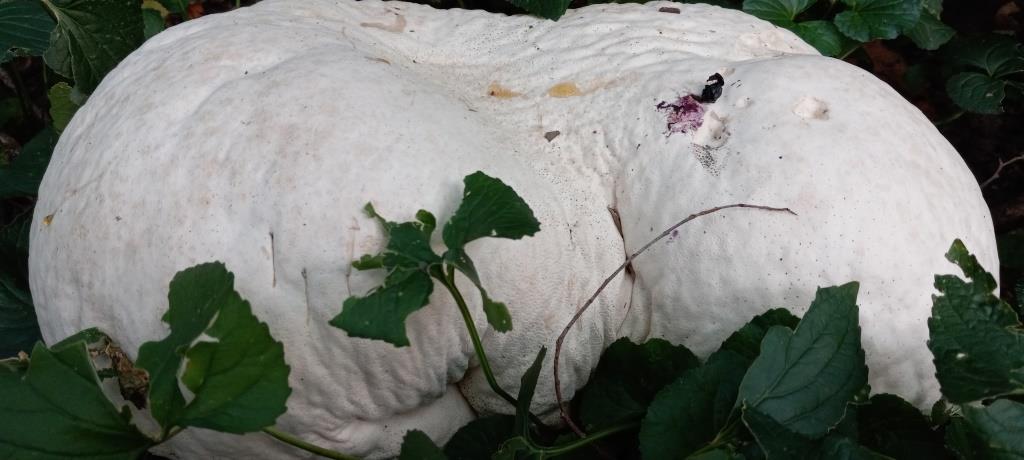
That is all for now, except of course for this picture of a puffball mushroom growing near the pond!