
 A bit ago on a farm just down the road apiece…
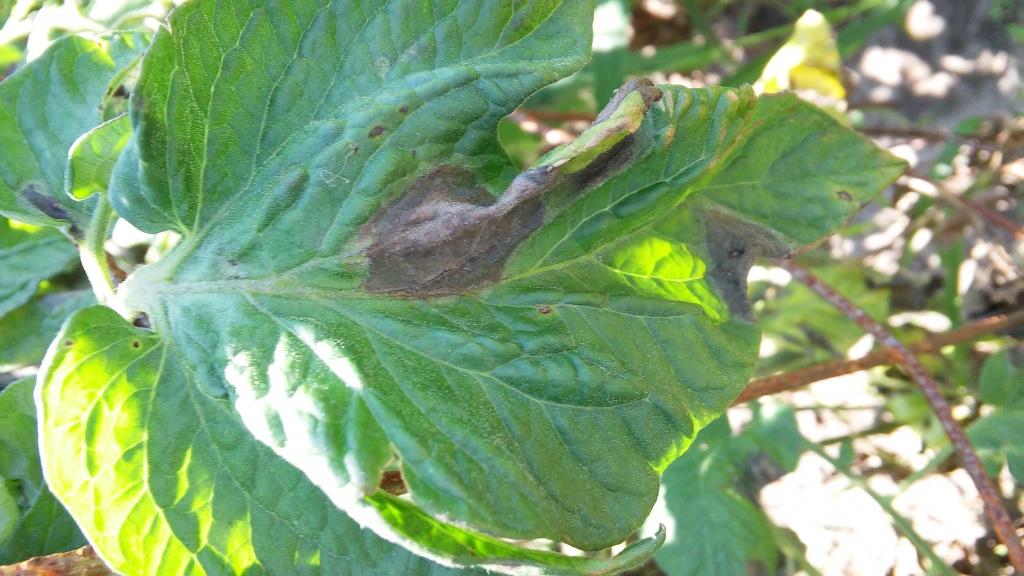
It has not been a good week here at the farm. We have been farming here for thirteen seasons now and this is the first time we have been hit with late blight on our tomatoes and potatoes. I suppose we should be happy that this is the first time but it is not a time for joy. Late blight is a serious disease of tomato and potato plants that kills infected plants in a matter of weeks. It was the cause of the Irish potato famine in the 1800s. We first noticed something was amiss a couple of weeks ago. There was something affecting our tomato plants that we hadn’t seen before. I was already a bit on edge due to a conversation I had earlier this season from a member who stated her tomato plants died within a matter of a few days. Based on her comments I suspected her plants were hit by late blight. Though she lived more than 10 miles away I was concerned that if there is late blight nearby it may spread to our farm.
So after I first noticed these symptoms I spent some time investigating what it could be. I find translating written descriptions of symptoms into visual representations of what is described to be difficult for me. For example, “greasy brown spots on fruit”. What does that mean? My fruits have brown spots but they aren’t “greasy”. “Large, irregular, water-soaked lesions on leaves”. Well, the leaves have irregular lesions — some of which are large — but I wouldn’t call them “water-soaked”. You get the idea.
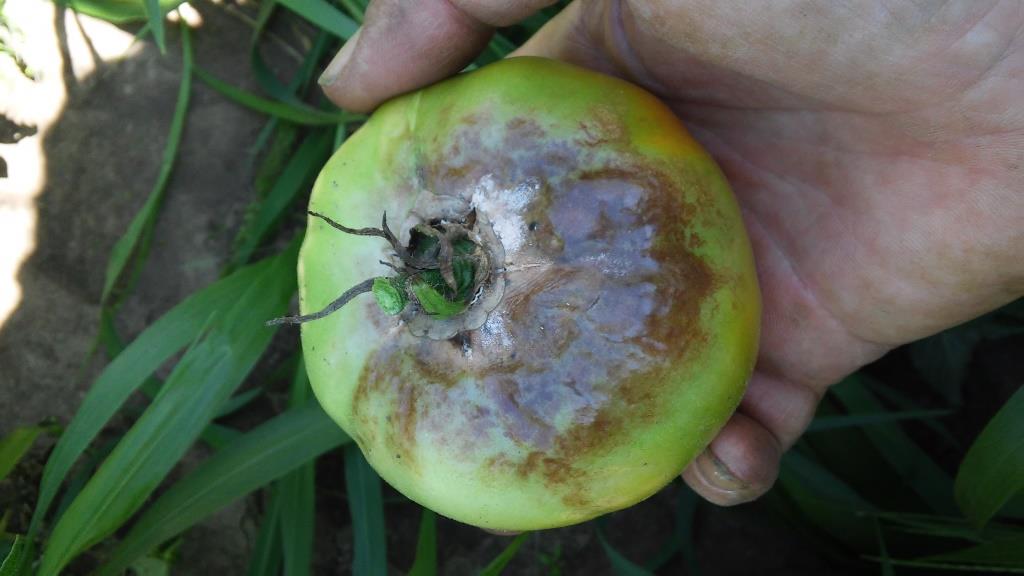 I then looked at the pictures accompanying the articles. Some are pretty clear, some not so much. Some of the diseases were obviously not what we had, but some picture of different diseases were quite similar. Eventually we decided it was time to ask the experts. So I dug up a tomato plant, put it in a large garbage bag and asked Susan to drive it down to the University of Minnesota Plant Pathology Lab. I spoke to them earlier about my suspicions and asked about turnaround time for a diagnosis. I was told, “If you suspect late blight you are put at the head of the line.” Seems they take late blight pretty seriously.
The results were phoned back to me within a couple hours. My suspicions were confirmed. We have late blight. I guess since I had already suspected it I was already working through the Kübler-Ross five stages of grief — I had made it to stage four, “depression”, by the time I got the news. The phone call pushed me over to the fifth and final stage “acceptance”.
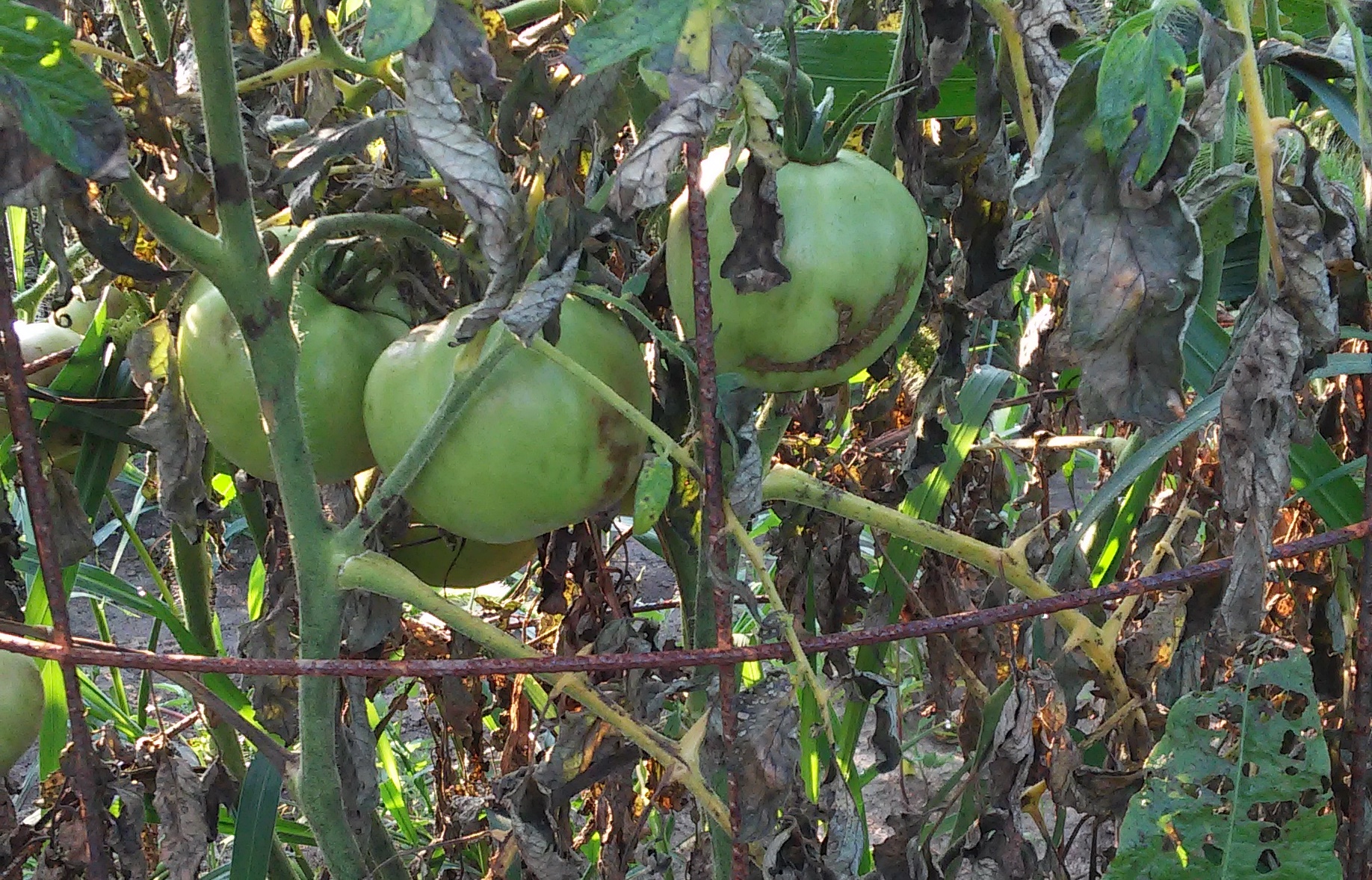
So what does having late blight mean to the farm and equally important to our members? Well, first of all I have to get all of you through the five stages of grief quickly because we don’t have much time. So let’s just start with “depression”. We harvested what I suspect to be all the tomatoes you will get from the farm this year. Late blight kills tomato plants in a matter of weeks. It affects all parts of the plant including the fruits. It is not a disease “you can live with”. So we will harvest whatever tomatoes look like they are free of blight then take out the remaining plants and burn the debris as soon as practical. Perhaps this is a good time to talk about the “shared risk” part of being a member of a CSA farm.
Now that you are in stage four lets get you to stage five, acceptance. On the bright side, though it has killed our potato plants, there is a reasonable chance we can still harvest the spuds. Our first step once we confirmed our diagnosis was to mow down the remaining potato plants. The one saving grace of late blight is that it can only survive on living tissue so by lopping off the tops of the potato plants we kill the above ground living tissue thus stopping the spread of the disease (hopefully) to the below ground living tissue — the spuds. Being that late blight is caused by a water mold and reproduces by spores, it doesn’t travel through the plant and infect all parts of the plant like a virus would; only parts of the plant where the mold spores have taken hold will be effected by the disease. One article indicated that it takes about two weeks for the spores to die so it is best to wait for at least two weeks before digging the spuds so as to not spread the disease to the tubers. Plus this gives the tubers time to form a thicker skin that can resist contracting the disease.
 We will give out the potatoes we currently have in storage this coming week. Then we will start digging potatoes again in about two weeks. Now these potatoes may or may not have late blight — the spores may have already dropped into cracks in the soil. If they do have late blight they are still safe to eat, however they will rot faster and transfer the late blight to other potatoes in storage. We have noticed that some of the potatoes we have stored here are rotting pretty fast. So I suggest eating your potatoes soon after you receive them or at the very least keep an eye on them, culling the rotting potatoes quickly. Do not put rotten spuds in your compost if you plan to grow tomatoes or potatoes in your garden next season. As I stated above, the spores can only survive on living tissue and potato spuds are living tissue. The spuds will most likely die over the winter but in a compost pile there is a chance they may not. So play it safe and toss the rotten potatoes in the trash.
How does this affect WinterShare? I don’t know. We will likely have a bunch of potatoes available and there is a some chance they won’t have blight and rot but there isn’t any guarantee. So we will have to see how they do in storage here for a few week before we decide what to do about WinterShare. We will certainly have plenty of garlic for WinterShare.
Another positive is that since this disease only survives on living tissue there is a good chance we won’t have this problem next season (cross your fingers). It doesn’t survive in the soil unless there is living material under the soil (e.g. potatoes we failed to harvest that somehow survived the freezing temperatures). Above ground plant material dies over the winter here. We just have to be more diligent next season about finding and destroying any volunteer potato plants or perennial nightshade weeds.
How could we have avoided this? Not very easily. Late blight is caused by a water mold that reproduces quickly when given the right circumstances. Spores from the mold can travel up to 30 miles on the wind. It reproduces best when nighttime temps are in the 50s and daytime temps are in the 70s with ample moisture from rain or dew. This is the exact weather we’ve had for the last couple weeks. The water mold has been enjoying the weather as much we humans! There is no organic way to get rid of late blight once it is established. The only organic solution I have read is using copper-based fungicides on a weekly basis as a preventative measure. Though some copper-based fungicides are allowed by organic standards there are adverse repercussions from their repeated use. So I am more inclined to take our chances without subjecting the farm and its employees to harmful chemicals — organic approved or not. This approach worked for 12 years, hopefully it will work for another 12.
One final unfortunate result of our infestation of late blight is that we can’t save our seed potatoes from this year for planting next season. So we will have to go out and buy all new potato stock. It is an expense I would have preferred not to have but given the situation we have no choice. Just to get an approximate cost estimate I looked into the price from one supplier and calculated it would be around $1,000 to fully replace the potato seeds we typically save from year to year. This is about half the cost of our current yearly seed budget. Hopefully I can find a cheaper alternative that has a similar mix of potatoes.
It has not been a good week here at the farm but I am thankful that we are not just a potato farm or we’d be out of business.
 What will we have this week? We will hand out tomatoes until they are gone. Same with cherry tomatoes. We will also have some of the potatoes we have left over from a previous harvest (including the seed potatoes we saved out for next season). We’ve found some of them are rotting so eat these quickly or at least keep an eye on them. There will also be onions, garlic, cucumbers, sweet corn, carrots, kale, chard, some peppers, some eggplants, possibly tomatillos and some summer squash. Plus the remaining beets (we picked the last of the summer beets yesterday). We plan to harvest bunches of lemon thyme as well. Apparently it goes well with carrots.
FruitShare this week is Colorado Peaches (unless you ordered mixed fruit a la carte).
CheeseShare, EggShare and IceCreamShare are also this week.
CoffeeShare came on Monday.
I think that is all for this week. Sorry about the lack of tomatoes this season. Sometimes Mother Nature wins.