
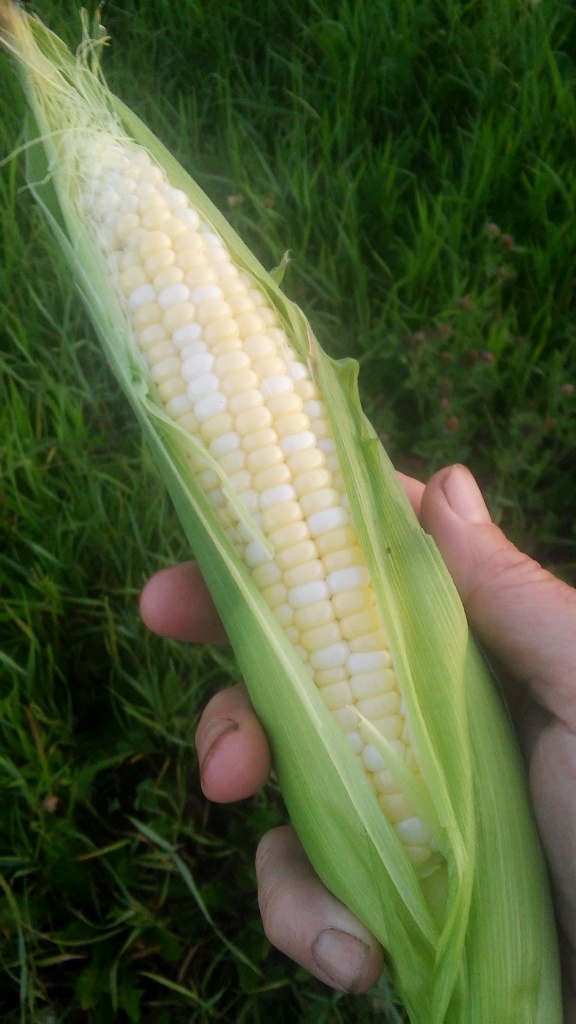
 A couple weeks ago I was talking about some of the benefits of having birds on the farm. They are good pest eliminators. Unfortunately they are also pests. Here are a couple of examples (and it always seems like it is the crows…)
Because we grow our crops organically we do not use any treated seed. One purpose for treating the seed is to prevent it from rotting before it germinates in cold, wet soils. By treating the seed with certain chemicals the farmer can plant the seeds earlier in the season in hopes that it grows bigger and produces more or has an earlier crop to harvest. If the farmer was to plant untreated seeds early in the season there is a good chance the seed would rot in the cold wet soils and there would be no crop to harvest. So many farmers who do not treat their seeds will plant them later in the season after the soil warms and dries.
Another approach for non-treated seed farmers is the one we use: transplanting. By starting the seeds in the greenhouse we give the seed the right temperature and moisture to achieve maximum germination. Then when the plant is large enough we will transplant it into the field. At this time since it is a growing plant and not a dormant seed it will continue to grow without rotting. This works quite well but is also very labor intensive. A good example of works great/more labor is how we grow sweet corn.
We plant our sweet corn from transplants we grow in the greenhouse. Each corn plant only produces one ear of corn so for us to provide the amount of sweet corn we typically provide we have to plant three plantings of close to 2,500 plants. That is a lot of transplanting! Can you imagine doing this on a 1000 acres of field corn? Not going to happen.
So back to the birds. On many occasions after we have transplanted the corn I will notice some of the plants have jumped out of the ground. Say what? Yes, a plant that we planted yesterday is now a plant that is no longer planted. Where was it trying to go? Well, it wasn’t the plants idea and it wasn’t the fault of the people transplanting. I discovered that crows like to eat germinated corn seed and have figured out that there is one at the bottom of each of the corn seedlings we just planted. All that work for a pesky crow to destroy in a matter of a few seconds. Argh!
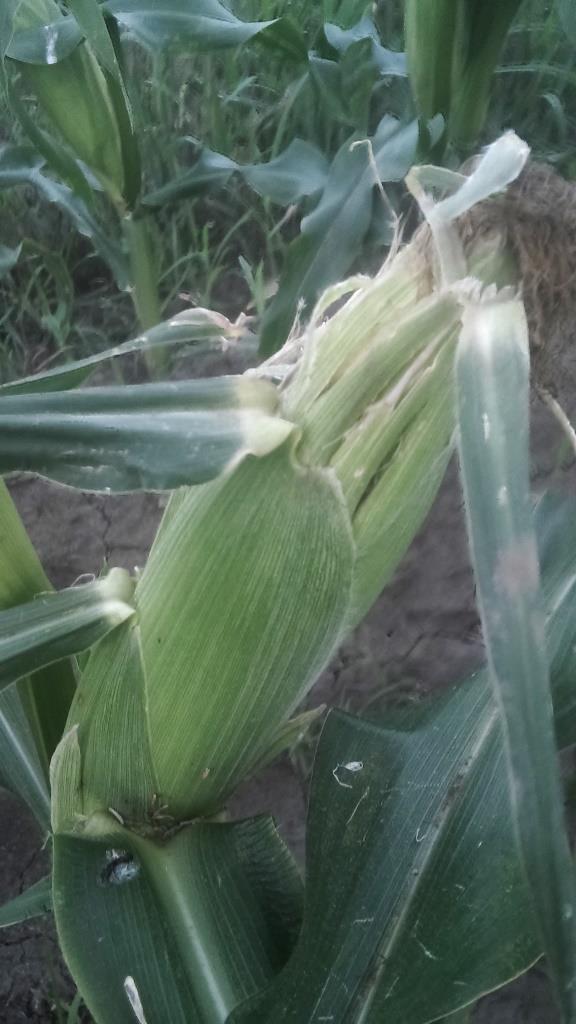 Another way birds get on my nerves and reduce out output is by eating the top parts of the corn ear. When the corn is almost ready to harvest they will sit atop the ear and pull away the corn husk until they get to the kernels then they will peck out the delicious creamy center of the kernels. Typically they only eat the top parts of the cob so the rest is still good, if nothing else gets in there to take advantage of the husk being compromised. Now if they would eat the whole thing they would get full before damaging a bunch of corn ears. But birds are selfish that way. So if you receive an ear of corn that looks like it is shredded either blame the birds or feel good in knowing that it passed the crow quality assurance test. You can also learn about the crows eating our watermelons here.
Enough about the birds but not enough about the corn: as those of you from the past know, growing corn organically risks the presence of corn earworms. These are the larvae of a not very attractive moth. The moth lays her eggs at the tip (usually) of a corn ear. When the egg hatches the larva starts eating the corn until it make is wholly unappetizing. We can typically tell if there is an older, larger earworm in the ear but sometimes the small ones escape our detection. So when you get your corn please be on the lookout for earworms and if you find one simply flick it off into the trash, cut off the damage and enjoy the corn. An ear of corn with an earworm is still edible and very tasty.
So, what will we have this week? Sweet corn! I bet you already guessed that. We will also have way too many squashes/zucchinis, a large number of cucumbers, a decent assortment of tomatoes, a hefty amount of cabbage (though we probably won’t put it into the boxes that received one last week — don’t want anyone to have too many cabbages), some cauliflower, red onions, some eggplant (its not producing like it did the last two years, which may be good if you don’t like eating eggplant at every meal), broccoli, a bit of okra, and tomatillos. As always, there may be other things I am forgetting.
We also have FruitShare, CheeseShare, EggShare, FlowerShare and SalmonShare this week.
And for those who read this far here is a corny joke:
What is corn oil used for?
To stop corn from squeaking.
As always, please send in your questions, comments, suggestions, jokes (corny or not), and any recipes that use a lot of summer squash.