
 When we initially started this farm back in 2002 we looked at our resources and different farming models to determine the best approach for making our farm successful. We knew we weren’t ever going to be large enough to sell wholesale, so that restricted us to the retail market. Within the retail market we researched selling farmers’ markets, having our own farm stand or starting a CSA farm. Our road is not well traveled so a farm stand really wasn’t feasible. We felt though that since we farm close to the Twin Cities we needed to use this to our advantage and there would be no advantage at a farmer’s market. So being a CSA farm where people pick-up at the farm became a big part of our approach.
When we researched CSAs and more importantly people’s experience with CSAs the one complaint we heard repeatedly was “Too much kale”. Apparently these potential customers who were previous members of other CSA farms were given boxes and boxes of kale with little other more preferable veggies like corn, tomatoes, cucumbers and beans. It sounded like CSA farms used kale as the packing peanuts for the few other veggies they delivered. People disparaged CSA farms due to this overabundance of kale.
So when we started our CSA farm we decided to not grow kale. We decided that we would promote our farm as the CSA that does not deliver kale. Join our farm, don’t get kale! I thought it was pretty successful. Kale-haters flocked to our farm. We became famous for our lack of kale. But then we got an overwhelming request from one of our customer to grow kale. Not one to duck a request from a customer we broke down and started growing kale — much to the delight of other members of our farm. It became evident that people liked kale, just not a box full every week. And so we have grown kale ever since.
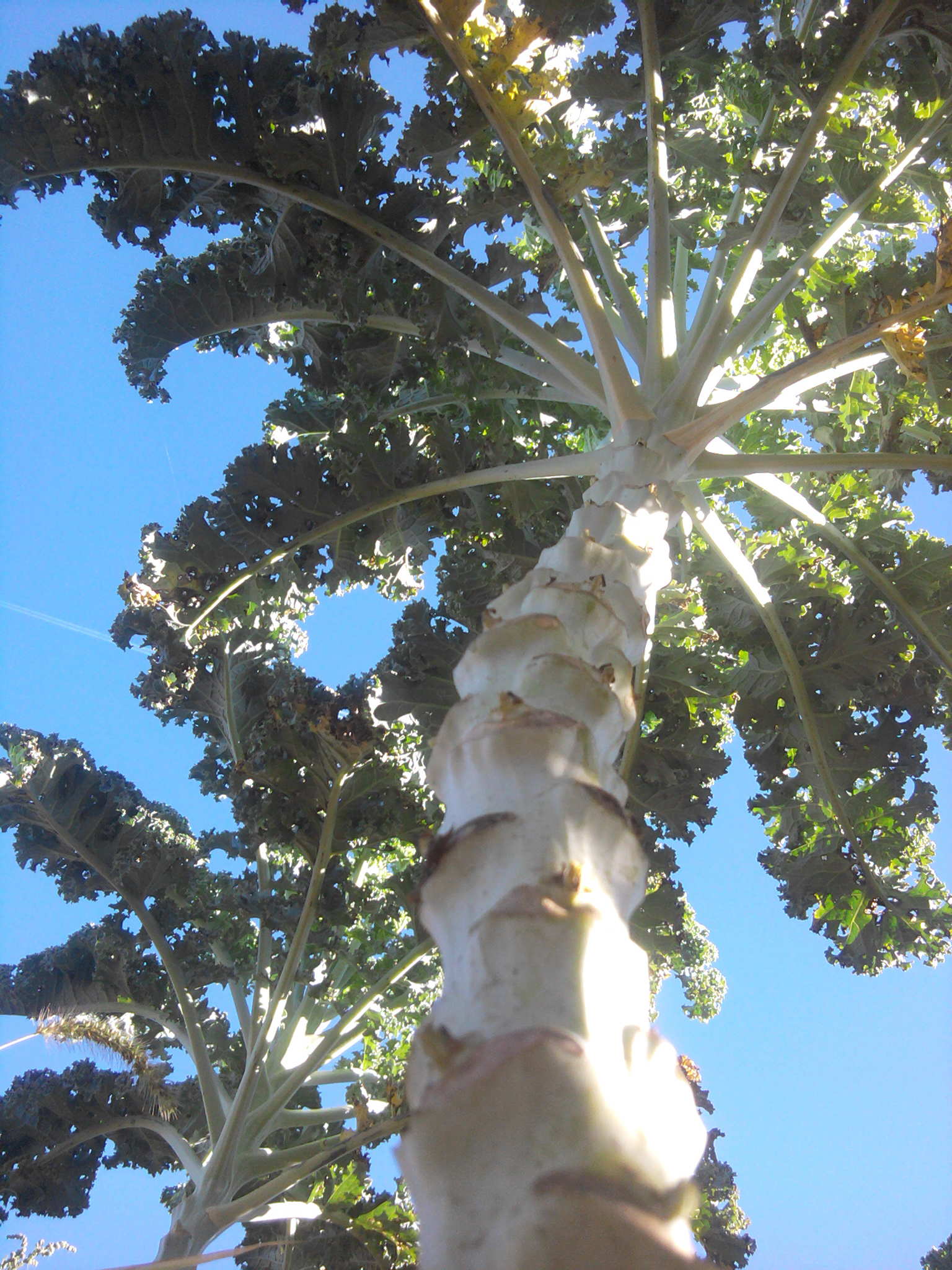
Which is why we are in the fix we are in today. We have always grown a variety of kale called Winterbor. It is productive. It grows fast. We can harvest leaves from the same plant multiple times over the course of the season without replanting new plants. It worked really well. Then last season when we placed our order we were told that Winterbor was on backorder. Eventually we were told there wouldn’t be any available and that we should try another variety. We had a few leftover seeds of winterbor so we decided to do a side-by-side trial of the new variety and winterbor. Winterbor was far more productive.
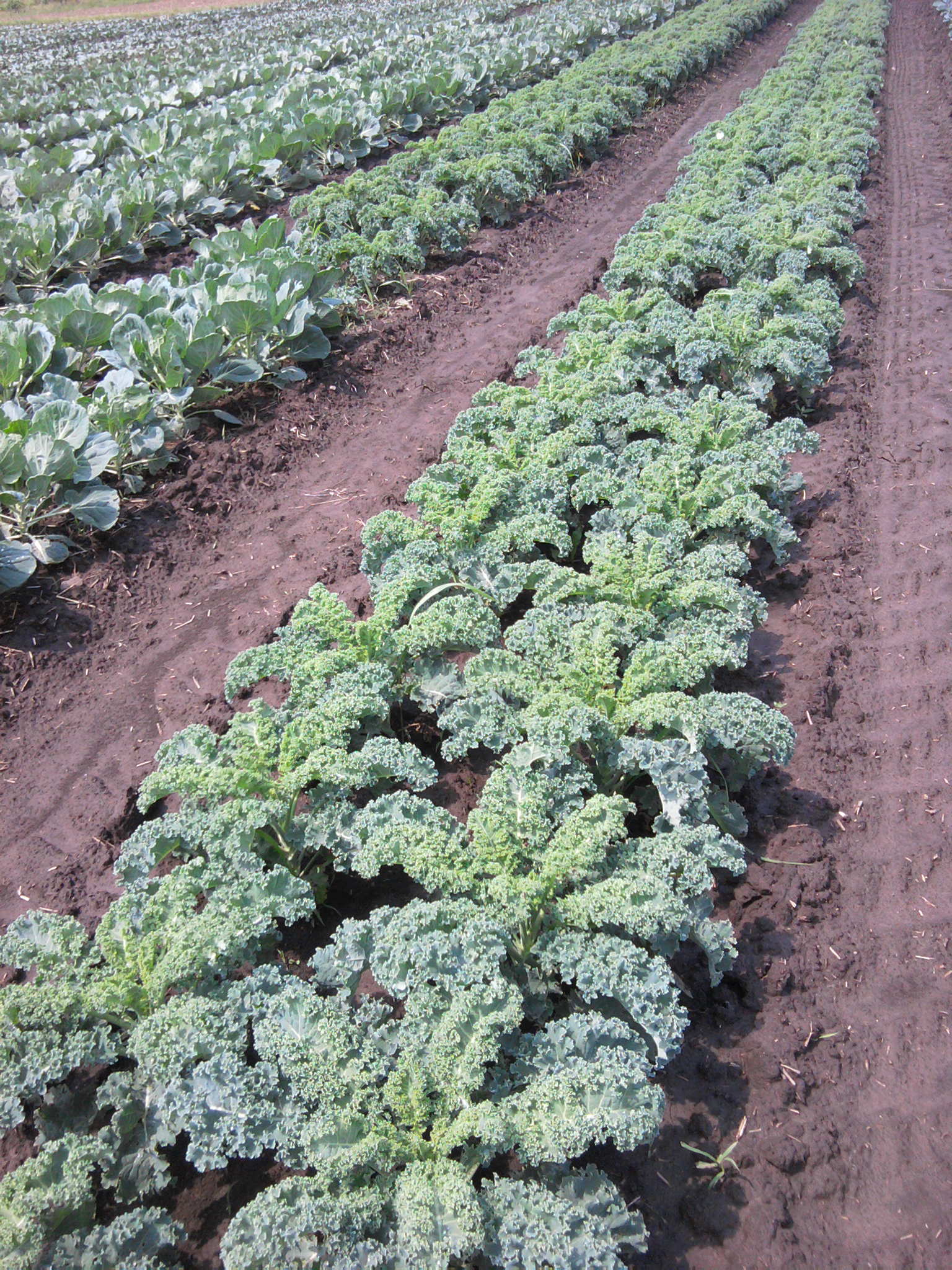 This season we planned to plant just Winterbor again. When ordering our seeds we were again told it was on backorder. In checking our other main supplier we found they were on backorder as well. Now it appears that both suppliers will not have any winterbor available and they suggest planting other varieties. I long for the early days of farming when we were the CSA that didn’t grow kale.
I wanted to know, what the heck is going on with the winterbor kale? Why the dearth of seeds over the last two seasons? Apparently most of the winterbor kale seed is grown in a specific region of Europe. Over the last two seasons they have had weather not conducive to growing kale. There is also information indicating the disease “black rot” affected the kale plants and subsequently the kale seeds. And since kale is a biennial — it produces seeds during its second year of life — this problem could last several seasons.
Of course another reason for the lack of available winterbor kale seeds is the increase in popularity of kale. Even without the seed production problem if the demand for kale increases substantially the supply of inputs for that product may not keep up with the demand. We need places like McDonalds to stop selling healthy kale and focus on greasy burgers and fries (focus on your strength!) — until of course there is some seed potato catastrophe.
This is an excellent example of how the consolidation of seed companies have impacted our ability to provide our customers with the products they expect. If kale seeds were grown in more places around the world a problem in one region wouldn’t dramatically impact the availability of that seed. But this isn’t something we can fix; we just have to work with the circumstances we are given.
So this season we will have a new variety of kale. I have no idea how well it will do. Perhaps we will be pleasantly surprised. Then again we may only have small amounts due to the slower production of the new variety. Perhaps we will have to go back to a modified version of our original slogan, “The CSA farm that grows kale but doesn’t give you very much.” It just doesn’t have the same ring to it…
We still have shares available so please keep spreading the word. Here is a map of our existing drop sites.
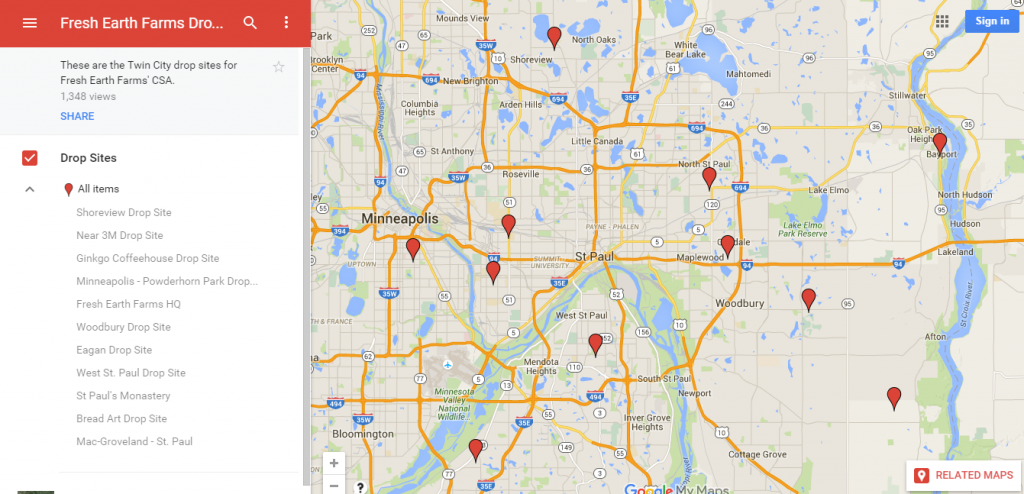 We have several new drop site which may work out better for you or people you know who are interested in joining. Click on the map to be taken to our Google map for more in-depth analysis. If you would like to switch drops site please let me know as soon as you can.
Payment for VeggieShares is due in March unless payment terms have been arranged.
Payment for other shares (Meat, Fruit, Cheese, Bread, Eggs, Coffee, Seafood) is due by the end of May again unless payment terms have been arranged. Deadlines for ordering other items vary by product so it is better to purchased them soon (and pay by May or with a payment plan).
As always, please send in questions, concerns, jokes, brain-teasers and spare winterbor kale seeds.