
 The unfortunate thing about the internet is that anyone can say anything and someone somewhere will believe him/her. Nowhere is this more prominent than in the discussions revolving around organic agriculture. A lot of people – and more importantly corporations – have a lot of skin in the organic ag game. This creates a lot of incentive to obfuscate the truth about what organic is all about. With platforms like Facebook and blogs/articles that allow comments, the opportunities have increased exponentially. Winter provides me a lot of time to get frustrated about what people are saying and believing when it comes to food and the raising of crops. I can’t count the number of times I’ve read completely false information presented as fact. And unfortunately either we don’t have the time or we don’t care to find out whether what is being said is true or not. We tend to form our beliefs and move on with our ever increasingly busy lives – ooh, did you here Kim Kardashian is scared about her pregnancy? I can only think of the George W. Bush quote when asked what newspapers he read: “I don’t read newspapers. I don’t want the facts to influence my opinions.” Maybe it wasn’t George, but you get the point.
Item number one on the list of obfuscations is the whole Genetically Modified Organisms (GMOs) thing. There are a whole range of interesting perspectives on GMOs. The one I find most interesting is the comment that goes something like this: “There is nothing wrong with GMOs. Humans have been manipulating the genetics of plants since the inception of agriculture thousands of years ago. We have saved the best seeds from this year’s harvest to plant next year thus influencing the evolution of the plants. We have planted and eaten hybrid vegetables for over 100 years. All genetic engineering does is increase the speed of developing new hybrids.” Wow. Talk about sticking your head in the sand (or somewhere else perhaps?) There is a HUGE difference between hybrids and GMOs. Hybrids are basically plants where humans (or bees, or other bugs) have taken the pollen of one plant and pollinized the flower of another plant of the same type creating a new variety of that plant. For example, you could take the pollen from a Black Krim tomato and pollinate a Hungarian Heart tomato and perhaps create a Black Heart tomato. There is no guarantee that this is what you will get but you could certainly try.
How is this different from Genetic Engineering (GE – the technology that creates GMOs)? With GE humans take the DNA from one species – say a flounder – and insert it into the DNA of a completely different species – say a tomato – thus creating something that could never occur naturally. Flounders do not find tomatoes attractive so they just wouldn’t ever mate with one – even in a darkened room with lightly scented candles and Barry White playing on Pandora! So humans are creating new life forms that never existed before. They are creating new life forms that could not ever exist if not for human beings. Humans are playing God. Or for you non-believers, humans are creating a whole new evolutionary path that would not otherwise occur. I’m not going to get into the discussion of whether this is good or bad – I certainly have my opinions and those could take up a couple more pages – I just want to point out that this argument people are using in favor of GMOs is ridiculous.
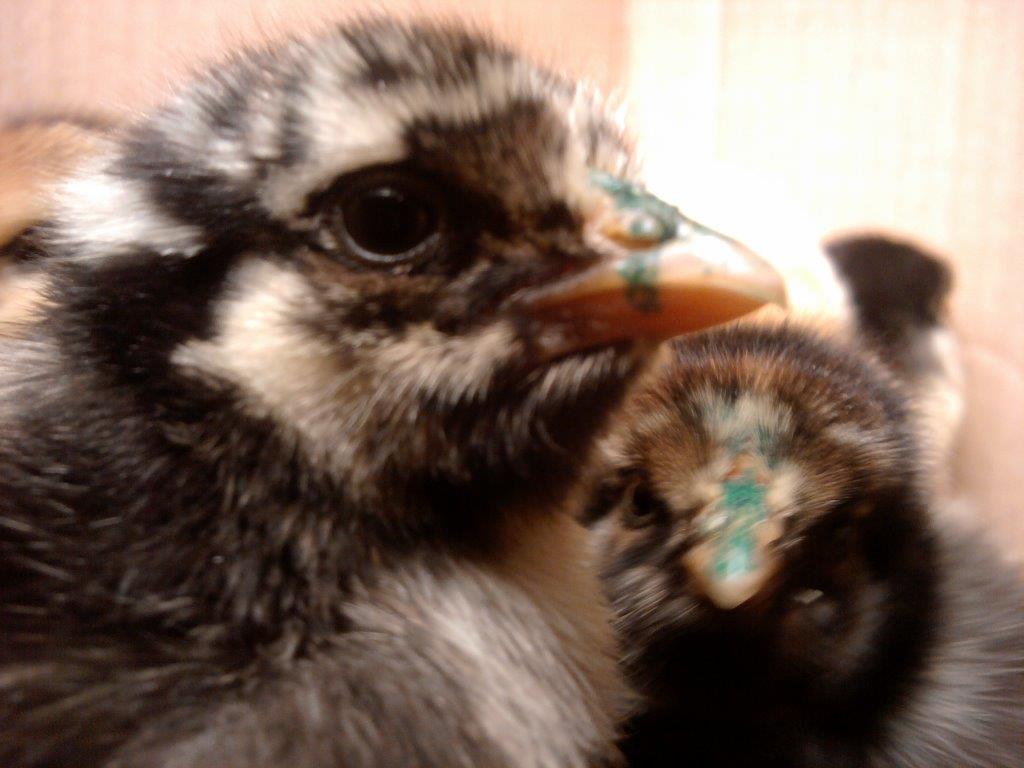 My favorite comment on organic food goes something like this: “The whole organic movement is all hype. It is a marketing tool for companies to charge you more for what is the same thing as regular food. All food is organic. All food is natural. Food comes from the earth. It is made up of carbon molecules. Look up the word organic in the dictionary. It says ‘Of, relating to, or denoting compounds containing carbon’. Food contains carbon. All food is therefore organic.” The interesting part of this argument is that it is correct. Organic is a marketing tool. The USDA makes this very clear. The USDA Organic label is a marketing program administered by the USDA for the benefit of farms and food producers who adhere to certain requirements in the way they grow and produce their food. It does not dictate how to grow, raise or produce food. It only limits what can be used in the production of food and in a few cases insists on certain procedures or requirements. As an example let’s look at a small part of what it takes to raise an organic chicken. Most people believe a chicken raised organically would be running around free, enjoying the outdoors, eating bugs and grass and getting lots of sunshine. The organic standards do say organically raised chickens must have access to the great outdoors. However access to the great outdoors can be one small door at the end of a 20,000 square foot building – housing 20,000 chickens – that opens up to a four foot by four foot “pasture”. This is hardly what the intention – nor the expectation – on how organic chickens are raised. So yes, in some ways organic is just like regular food but at a higher cost. (Maybe this is a good reason to buy your chickens from a farmer that actually raises chickens the way you feel they should be raised).
The second part of the argument that is also correct is that all food is “organic”. Yes it all contains carbon atoms. The error in this argument is that the commenter is using the chemical definition of organic, not the USDA definition of organic. Since I am quoting presidents this would be a good time to take aim at Bill Clinton, “It depends on what the meaning of the word ‘is’ is”. Or maybe a more appropriate quote would be, “It depends on how you define ‘alone’…” By choosing the chemist’s definition or organic we can say all food is organic. But most people wouldn’t use the chemist’s definition when talking about food. But if we pick and choose what definition we use we can make whatever argument we want, including all food is organic.

The third comment I frequently see goes something like this: “I do not want to eat GMOs. The only way to avoid eating GMOs is to buy organic. GMOs are in everything we eat. So eat only organic fruits and vegetables.” Ok, what is wrong here? First of all again there is some truth to it. Somewhere around 90% of the soybeans and 70% of the “field” corn grown in the US is genetically engineered. Almost all non-organic manufactured/processed food contains corn and/or soybeans (e.g. high fructose corn syrup partially hydrogenated soybean oil). Therefore almost all processed foods contain GMOs. But that doesn’t mean all foods. Let’s look at vegetables. Though the following argument will be changing over the next few years this is valid as of the writing of this article. There are very few GMO varieties of vegetables on the market. It has only been a year or two since GE sweet corn became widely available. There was work on and the release of a GE tomato in the 1990s that was supposed to store longer than standard tomatoes. It failed in the marketplace due to – despite the name Flavr Savr – its lack of taste. There are a few other GE veggies out there like zucchinis and potatoes but they are not very common and haven’t been widely accepted by farmers. I suspect the farmers haven’t found them beneficial enough for the increase in cost. So to say I will only buy organic veggies because I want to avoid GMOs is not a very good argument. There are certainly many other reasons to buy organic but to avoid GMOs is currently not one of them – unless you are talking about sweet corn.
However, I predict this is about to change – and change dramatically. Over the last ten years or more there has been a huge consolidation in the seed vendor marketplace. Somewhere in the neighborhood of 50+% of the seed business is controlled by three companies. Monsanto has been acquiring vegetable seed companies and with their acquisition of Seminis a few years age they’ve catapulted themselves into one of the largest vegetable seed companies in the world. Why would they do this? Well, they feel that they have saturated the commodity marketplace with their GE corn, soybeans, etc. and now want to move into the vegetable side of the food market. It is only a matter of time before they start testing and releasing GE vegetable seeds. This is the time we need to be more vigilant in what seeds we purchase. By selecting the right varieties from the right suppliers we can reduce the risk of accidentally purchasing GE vegetable seeds. One of the most helpful things Monsanto does is require farmers to sign agreements to purchase and plant their seeds. This makes it much easier to avoid them; if I have to sign something to purchase the seeds I won’t purchase them. Pretty simple really. But that unfortunately doesn’t stop Monsanto and other chemical companies from manipulating, exploiting and dominating the marketplace. The number of varieties of seeds available has dropped in lockstep with the consolidation of seed companies. These large companies are quickly reducing their product line eliminating seed varieties we have loved in the past. I wouldn’t be surprised if eventually most of the non-GMO varieties are eliminated – much like what has occurred in the commodity seed business – as the number of GMO varieties increase. I think this is something we all need to concern ourselves with. Do we want chemical companies dictating what we use to nourish our bodies? Seems like a scary world to me.
Hopefully we can all take our nose out of the latest People magazine to increase our knowledge of what is fact, what is fiction and maybe even more importantly, what is still to be determined. Making alarmist comments does not help the cause. Making false statements helps even less. Being educated and having cogent arguments will only make the organic case more effective.