
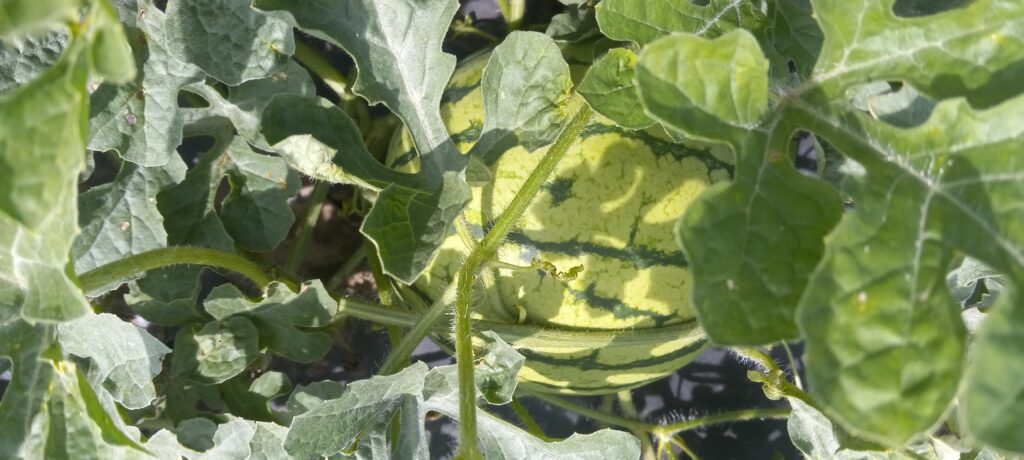
Learn about the crime investigation unit of Fresh Earth Farms in this week’s newsletter. But first the announcements.
Just a reminder to send in pint-size clam shell containers. Pint-size only please.
What will we have this week?
Zucchini. Lots and lots of zucchini. Might be time to find more friends who like zucchini. We also have the last of the lettuce, some tomatoes, a few broccoli (it hasn’t been good broccoli weather this season), onions, some garlic scapes, many cucumbers, snap peas, snow peas, shelling peas, a few cherry tomatoes, a few beets, eggplants (some got a little bit bigger than we like but still taste good), some okra, basil and probably a few odds and ends I’m not recalling.
It is a Flower, Coffee and Cheese week. Flowers are all different kinds. Coffee is Honduran. Cheese is Big Woods Blue — a strong blue cheese flavor with a buttery finish, Hidden Falls — a bloomy rind reminiscent of brie, and Shepherd’s Hope Garlic Herb — a fresh cheese that can be a substitute for mozzarella.
A Quick Note About Basil
I believe most people know, but maybe not, that basil should not be put in the fridge (neither should tomatoes but that is a subject for another time). The ideal storage conditions for fresh basil are 55 degrees F and 95% relative humidity. Just the type of conditions most of us don’t have. What I find works well is to put the basil in an open plastic bag with a wrung out paper towel, then set it in a cool spot in your kitchen. On the counter works well since you’ll see it frequently and maybe think to use it so you don’t have to store it any longer. The wrung out towel keeps the humidity in the bag high. Having the bag open keeps the humidity from getting too high.
If you want to store basil long term you can freeze it. Of course it doesn’t come out looking fresh and turns black but I find it retains the most flavor. Dried basil tastes like dried grass to me. To freeze just wash the basil, spin it dry, put it in a freezer bag and toss it into the freezer. When you want basil in the winter just break off a chunk. It crushes really well when frozen so no need to chop it up. You can also make a pesto with it and freeze that. Some people put the pesto in an ice cube tray so they can take smaller portions. We just freeze it in freezer bags in dinner sized portions.
So don’t let your basil go to waste! Stored properly it can last a week on the counter and a year in the freezer.
Farm News
So this week as I was admiring the watermelon patch I was reminded that we are not alone on this planet. In fact, we are but a few among many. What made me remember this was all the watermelons eaten by one of the others on this planet. One of the others that did nothing to contribute to the growth of these melons. A taker, not a maker.
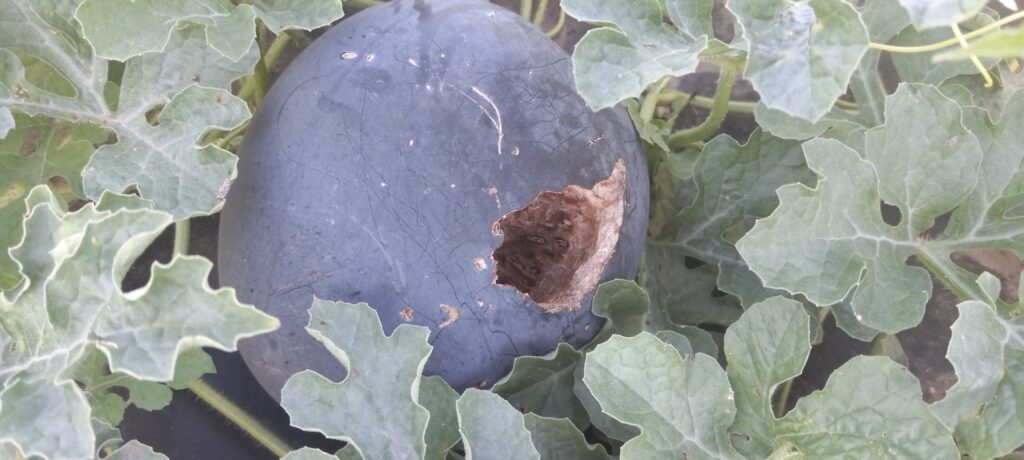
Once we discover this type of situation the next step is to swear. I’m not sure if it helps but it certainly doesn’t hurt. Then we have to figure out who or what the culprit was. And that’s where CSI:CSA gets involved.
I first noticed there was an issue when I saw the inside of a watermelon. This isn’t the normal part of the watermelon you see when it is still on the vine. So I knew quickly that something was amiss. Then I noticed more watermelon guts. Like a lot of watermelon guts. Pinkish red. It was a massacre.
It was time to determine the cause. We typically have a few of the usual suspects in these types of situations. So that is the best place to start. But we have to find evidence to determine which of these is the perpetrator. The first place to look is at the watermelon body itself. It holds clues to the identity of the suspect.
On first look it appeared to have been eaten. Same on second look, third look and every other look. Maybe this isn’t the best place to look. But what was that in the next aisle over? Aha! Poop! The ultimate clue!
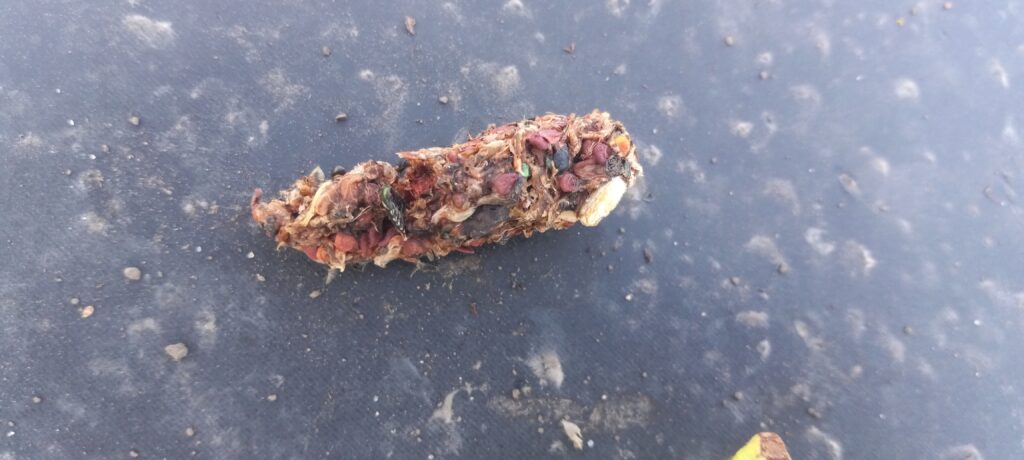
As I investigated the poop I noticed it was a reddish color. Could be from the watermelon but it wasn’t definitive. Then I noticed the watermelon seeds. Hmm. Seems much more definitive. I think we found an important clue. Whatever ate our watermelon also poops outside.
Ok. So far we have “likes watermelon” and “poops outside”. Still doesn’t narrow down our usual suspect list. The size of the poop was pretty small, like an inch long. Maybe a small raccoon? Ground squirrel? A very, very small deer? All possibilities. If only I had another clue.
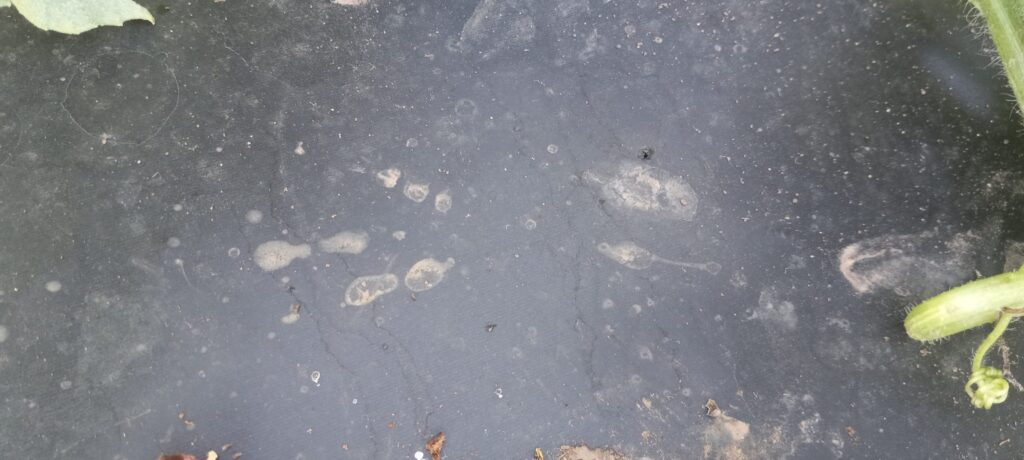
And there it was. The telltale sign of our culprit. I set of foot prints. Small foot prints. Distinctive foot prints. The type of foot prints we find on our faces as we age. Crows feet foot prints! My first thought was, “Do crows really make that type of poop? I always thought bird poop was white and runny”. Maybe I have two culprits? Time to hit the books, or in our case living in the 21st century, the internet.
This is where I learned that crows, much like owls, will regurgitate items they eat that aren’t digestible, like say watermelon seeds. So this “poop” I found wasn’t in fact poop but a crow pellet. Interesting. But not interesting enough for me to not be upset that they ate 25 of our biggest watermelons. With this level of damage it had to be more than one crow. It had to be a murder!
I’m sure you are wondering what can be done to prevent future watermelon predation by these murderous crows? Building a fence is ineffective since they fly — or is it? What we’ve learned over the years is that crows do not like to be in a situation where they can’t just jump-up and fly away. They don’t like walking away from trouble. They don’t like being beneath things. So we have to create an environment that makes them feel like they are beneath something thus making them uncomfortable. And we do that by using hoops and strings to create a psychological barrier. They don’t want to wander under the string and possibly get trapped, so they leave the watermelons alone and instead find something else to eat — like our cucumbers. So we don’t necessarily reduce the damage the crows do but we direct it toward a less valuable, more abundant crop. Too bad they don’t like zucchini.
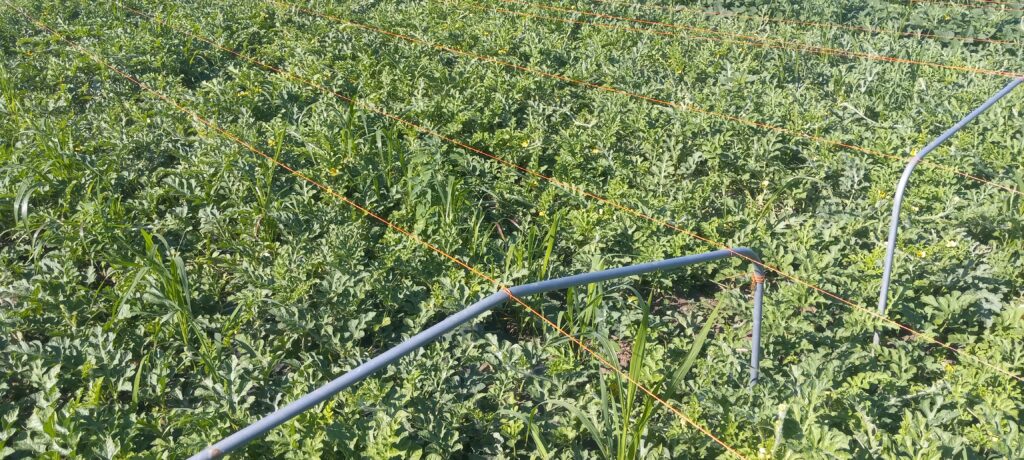
We’ve found this type of damage in other years that are hot and dry. This particular year has been hot but it hasn’t been dry. So I’m a bit surprised that the crows attacked our melons. On the other hand, the melons did look tasty so they may have just had a hankerin’ for watermelon and took advantage of our graciousness.
Why don’t we put these strings over the melons sooner to prevent all crow damage? Because it makes working with the plants challenging for us as well. We can’t cultivate the plants with the strings on. Harvesting becomes far more cumbersome having to walk over the strings. It would be better to just not have the crows eat the melons than to have to put strings up and deal with the ramifications. But unfortunately the crows don’t abide.
Recipes of the Week

Voula’s Greek Salad
Ingredients
- 2 medium cucumbers cut into bite-sized pieces
- 4 medium tomatoes cut into bite-sized pieces
- 1 medium sweet onion cut into bite-sized pieces
- 8 oz feta cheese
- 2 T oregano chopped — fresh preferred
- ½ c olive oil
- ¼ c red wine vinegar
- salt and pepper to taste
Instructions
- Combined chopped cucumbers, tomatoes and onions in a large salad bowl.
- Crumble feta cheese over vegetables.
- Add chopped oregano.
- Add oil and vinegar.
- Toss.
- Add salt and pepper to taste.
Here is a zucchini recipe sent in by our one reader. I tried it this past week and found it to be quite tasty! Zuccini garlic bites. I used garlic scapes.
https://growagoodlife.com/zucchini-garlic-bites/
For those who are looking for a eggplant recipe, here is one to try! It goes great with the Greek salad above! Not sure why there is an okra flower on this recipe. I’m sure I am using the recipe software in a way it wasn’t designed.

Eggplant with Feta Cheese and Kalamata Olives
Ingredients
- 2-3 Eggplants, Japanese preferred cut into bite-sized pieces
- ½ jar Kalamata Olives pitted
- 4 oz Feta Cheese crumbled
- ¼ c Olive Oil
Instructions
- Heat olive oil in pan
- Add eggplants. Cook until soft
- Add olives. Cook until heated through — above 5 minutes
- Add feta cheese. Remove from heat.
- Mix and serve warm
Notes
Joke of the Week
What is a crow’s favorite vegetable?
Caw-liflower
As always, do not hesitate to send in questions, comments, suggestions, jokes, or other things that can be easily sent using the technology available to us in the 21st century.