
We are still selling shares. Spread the word! Share on your socials. We need all the help we can get selling the remaining share! Order through our online store!
We are still selling add-on shares. Some have a limited supply. Please order these soon!
Most people who ordered transplants have picked them up. But there are a few of you who have not. Please pick them up soon. Never know when the creature mentioned in last week’s newsletter decides to spice up their diet with a few herbs.
Farm News
We got a lot of planting done last week. The weather was a bit warm and the air was quite dry. Plus it was very windy. Not the best weather for transplanting delicate little plants. Plus without our usual process for acclimating the plants to the great outdoors, the plants were especially vulnerable. However we did come up a process that I think worked. But first let’s recap the problem from last week.
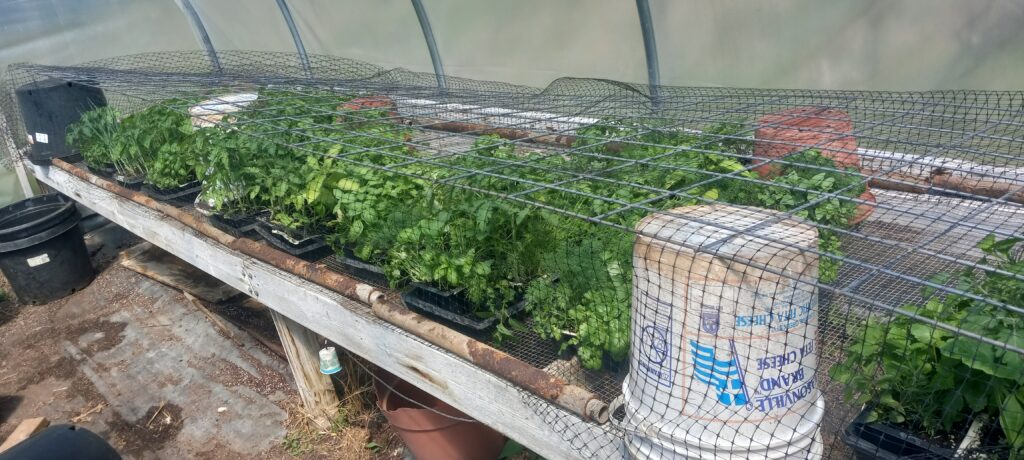
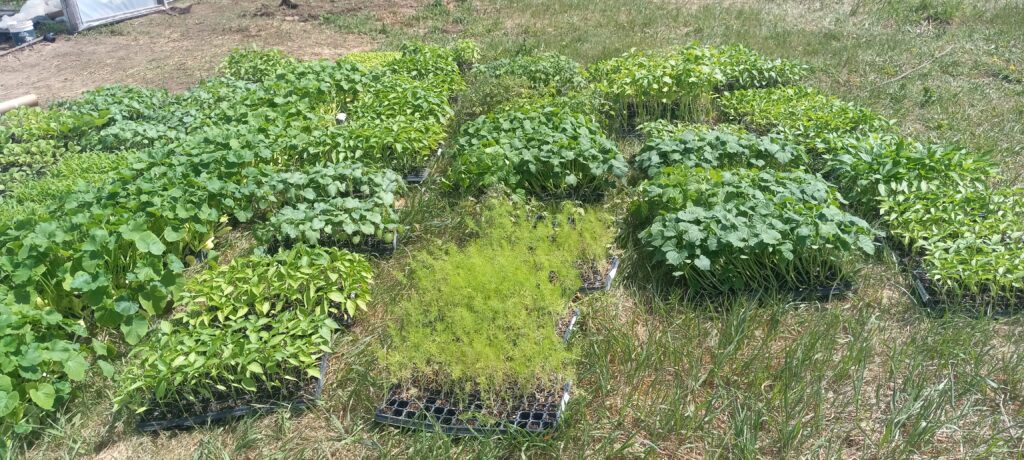
When we grow transplants in the greenhouse they are coddled and cared for in ways that nature can’t provide. They never get too cold and seldom get too hot. They get water when they need it and the covering on the greenhouse shades the plants a little bit. It’s a nice place to be a plant. In addition, taking transplants out of their growing container and sticking them in the ground stresses the little guys. So we don’t want to go directly from the warm, comfortable confines of the greenhouse into the harsh reality of nature all while ripping them from the home they’ve known their whole, albeit brief, life. So we try to transition them by first putting them in a covered structure that does not have supplemental heat nor fans for cooling. Then after a day to a week or more we transition them to the outdoors where they get more sun and harsher, windier conditions, but still residing in the home they’ve always known and getting the water they need. Eventually after a few days to a week or more on the benches we transplant them into the ground.
As I mentioned in last week’s newsletter, there is a yet to be identified creature that has taken a hankering to our baby plants. This diabolical creature has put a kibosh on our plant transitioning process. So we needed to devise a new way to get our babies hardened off for existence in the harsh outdoor climate. We tried a number of nets and structures to put the plant in to protect them while they acclimated. Unfortunately these structures proved to be clunky and difficult to use. Putting plants into and taking plants out of them was cumbersome at best. So we needed a plan B. But what could that be? Racking what little brain I have left didn’t result in any brilliant idea. So for a while I was stumped.
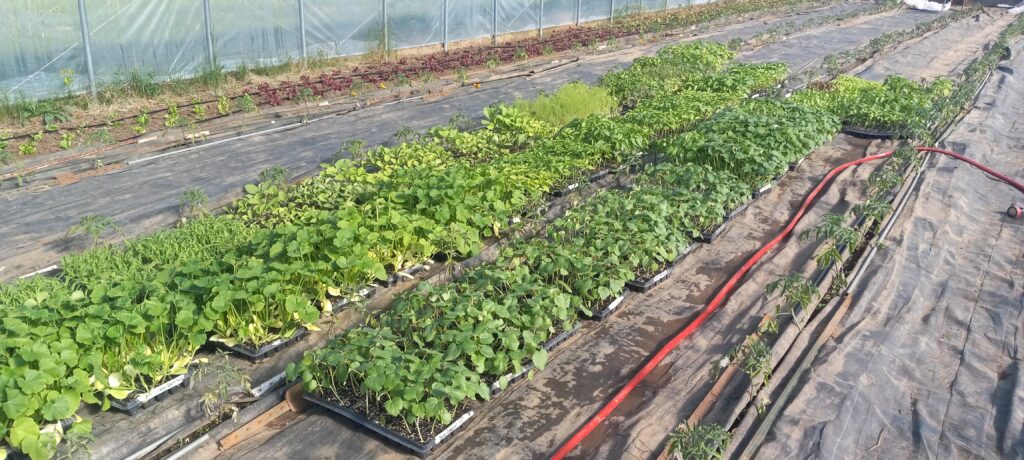
But then I awoke at 4:00 am — something I do now that I am old — and finally had my answer! Why not just move the plants we would usually move to the cold frame out into the hoop house? The hoop house is like the cold frame just a whole lot bigger. But it also doesn’t have benches to put the plants on, which could be a problem. There are bunnies out by the hoop house and despite Link’s harassment, they don’t seem to be going away. The hoop house could become a rabbit salad bar!
However, I decided it was worth the risk since so far this season the bunnies haven’t eaten the lettuce that is planted in the hoop house. And, if we didn’t acclimate the plants before transplanting they may not survive. So it was worth taking the risk and hope the rabbits don’t find the plants.
And that’s what we did. Since the risk was greater than usual we didn’t want to leave them out there as long as we typically do. So we left them in the hoop house for a day, then moved them outside the next day then back into the hoop house at night then back outside the next day. Then we started transplanting them into the field. I felt the acclimation process wasn’t sufficient, so we ensured the irrigation system was setup as we transplanted them, then ran it immediately after. We gave the plants a big dose of water using our transplanter then another big dose of water with the drip tape. So far it seems like this scheme worked. We got through the heat and drying winds of Friday and Saturday. If all goes as planned we can consider this approach a success.
Now of course since we didn’t give them as much time to acclimate, we transplanted the plants a week or so earlier than normal so we run an increased risk of getting a frost. But most of the plants we planted we put on black plastic that we’ve found in the past kept plants from freezing when we have a late frost. We probably would have done something different if we didn’t have the black plastic mulch, but with it we can hedge a little and plant a bit earlier with more confidence that the plants will survive.
Anyway, that’s all for now. As always, do not hesitate to send in questions, comments, suggestions, share orders, or anything else you think would be interesting or helpful. And please, please, please spread the word. We really need help selling the remaining shares!
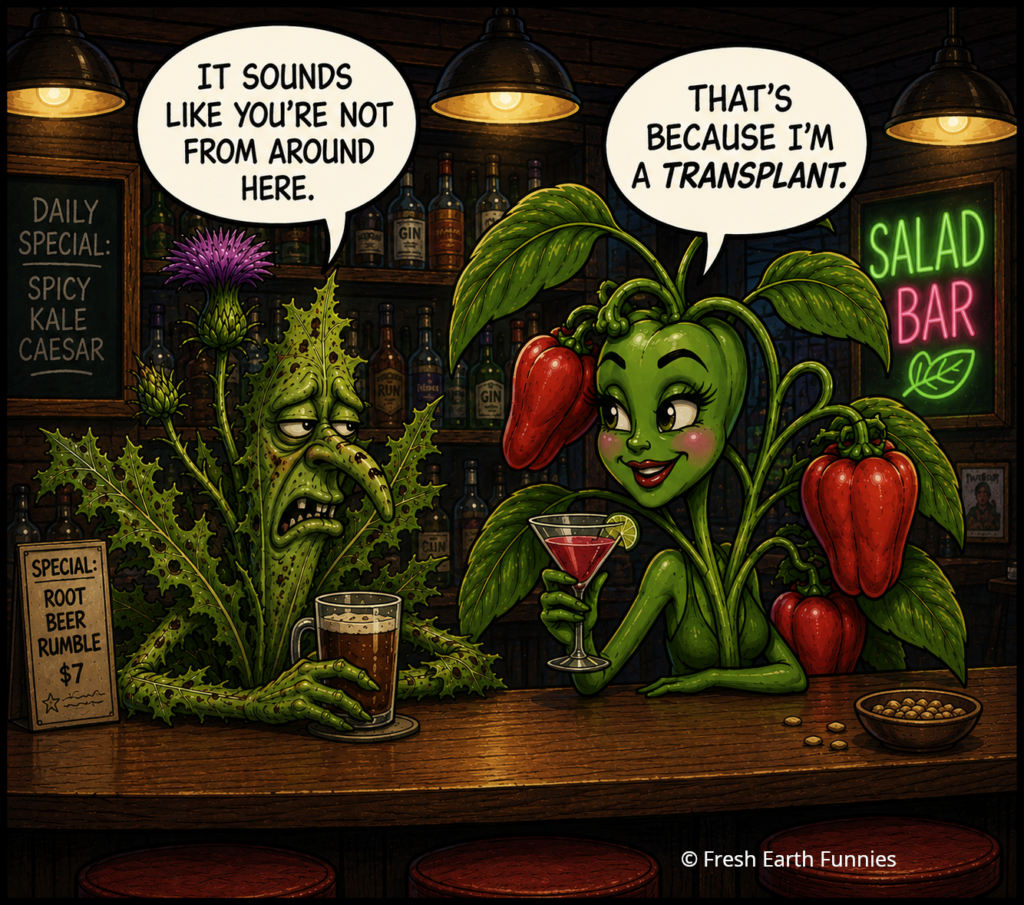
Joke of the Week
See comic at the top of this week’s newsletter.